Amazon Book Sales in 2026: From Meager to Meaningful
My first royalty check from Amazon was $47.32. That was for an entire quarter of sales of a technical book that took me the better part of eight months to...
My first royalty check from Amazon was $47.32. That was for an entire quarter of sales of a technical book that took me the better part of eight months to write. If you do the math on hourly rate, the number is so depressing it's actually funny. I think a lemonade stand run by a seven-year-old would have outperformed me on a revenue-per-hour basis.
That was 2024. My most recent quarter — Q4 2025 — brought in $1,847. That's still not quit-your-day-job money. But it's a real number. It pays for groceries for a couple of months. And more importantly, the trajectory tells a story that I think matters for anyone considering writing and self-publishing a technical book.
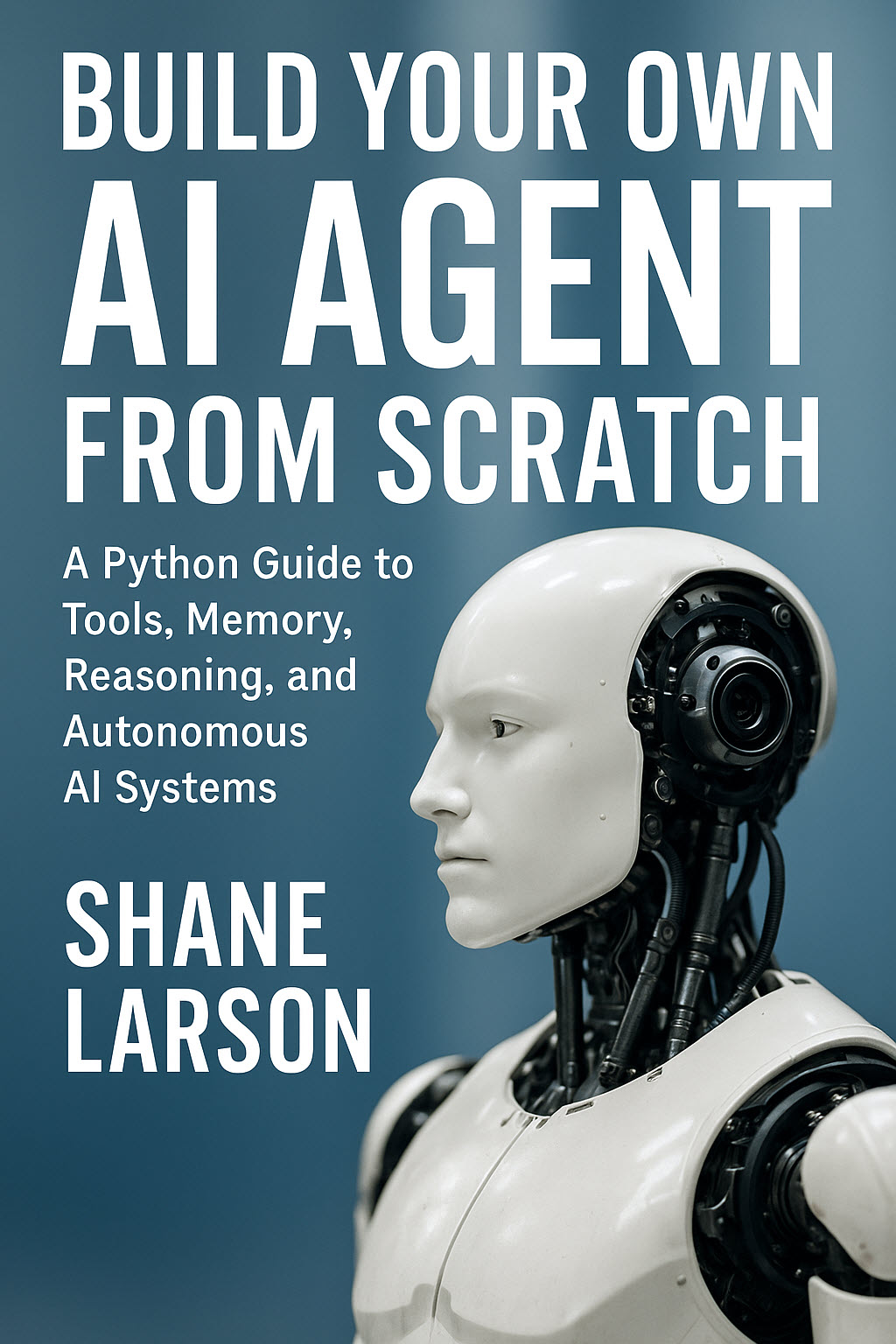
Build Your Own AI Agent From Scratch
Build a complete AI agent from scratch in Python — no frameworks, no hype. 16 chapters covering tools, memory, reasoning, MCP, multi-agent systems & more.
Learn MoreThe path from meager to meaningful wasn't accidental. It involved specific decisions about pricing, marketing, content strategy, and platform mechanics that I want to lay out in detail — because most of the "how to sell books on Amazon" advice is written by people selling courses about selling books on Amazon, and their incentives are not aligned with yours.
The Baseline Reality of Technical Book Sales
Let me start with the numbers that nobody in the self-publishing world wants to talk about honestly.
The average self-published book sells fewer than 250 copies in its lifetime. For technical books, the audience is smaller than fiction or self-help, but the per-unit revenue is higher because you can charge more. A novel self-published at $4.99 earns about $3.50 per sale through Kindle. A technical book priced at $39.99 earns about $14 per sale through Kindle and roughly $8-12 per sale for the paperback, depending on page count and printing costs.
My book — a technical guide to training large language models with Python and PyTorch — started at $34.99 for Kindle and $44.99 for paperback. In the first quarter after publication, I sold 11 Kindle copies and 6 paperbacks. That's where the $47.32 came from.
Those numbers are normal. They're not a failure. They're exactly what happens when you publish a book and do nothing else.
What Changed: Quarter by Quarter
Here's the actual progression, because I think the trajectory matters more than any single tactic:
Q1 2024 (Launch quarter): $47.32 — 11 Kindle, 6 paperback. I did essentially nothing for marketing beyond posting on LinkedIn and mentioning it in a blog post.
Q2 2024: $89.50 — 19 Kindle, 9 paperback. I started writing articles on Grizzly Peak Software that referenced concepts from the book. Each article linked to the book's Amazon page.
Q3 2024: $156.22 — 28 Kindle, 15 paperback. I joined several AI and machine learning communities on Discord and Reddit. Not to spam my book — to genuinely participate in discussions. My profile linked to my website, which linked to the book.
Q4 2024: $312.88 — 52 Kindle, 24 paperback. Two things happened: one of my articles started ranking on Google for a competitive search term, and someone reviewed the book positively on a medium-sized YouTube channel.
Q1 2025: $487.40 — 71 Kindle, 38 paperback. Organic search traffic to my articles was driving consistent book discovery. I also updated the book to cover newer PyTorch features and re-launched it with an "Updated for 2025" badge.
Q2 2025: $723.15 — 94 Kindle, 52 paperback. I released a companion code repository on GitHub and added it to the book's description. The repository became a discovery channel of its own.
Q3 2025: $1,104.60 — 128 Kindle, 71 paperback. Grizzly Peak Software was getting real organic traffic now, and the book was linked from multiple high-traffic articles.
Q4 2025: $1,847.22 — 187 Kindle, 96 paperback. The compounding effect was undeniable.
The pattern is clear: slow start, gradual acceleration, compounding growth. No single tactic was a silver bullet. The growth came from layering multiple small advantages on top of each other over time.
The Seven Things That Actually Moved the Needle
1. Content Marketing That Isn't Disguised Advertising
The single biggest driver of book sales has been writing articles on Grizzly Peak Software that are genuinely useful on their own but naturally reference concepts from the book.
The key distinction: I'm not writing articles that exist to sell the book. I'm writing articles that exist to help developers with specific problems, and the book happens to go deeper on those topics. The difference matters because readers can smell an infomercial from a mile away, and Google can too.
A good article in this model looks like this: "Here's how to implement a custom training loop in PyTorch for fine-tuning a small language model. I go into more depth on the underlying architecture decisions in Chapter 7 of my book, but here's enough to get you started."
The reader gets real value from the article. Some percentage of readers want more depth and buy the book. Google sees the article as a genuine resource and ranks it accordingly. Everybody wins.
I've written probably 40 articles that reference the book in some way. Of those, about 8 drive meaningful traffic, and 3 of those 8 account for the majority of book-driven traffic. You can't predict which articles will hit. You just keep writing and let search engines sort it out.
2. Amazon SEO Is a Real Thing
Amazon has its own search algorithm, and optimizing for it is different from optimizing for Google. The factors that matter most:
Title and subtitle. Your book's title should include the keywords people actually search for. "Training Large Language Models" is better than "The Art of Neural Enlightenment" if you want people to find you when they search for LLM training resources.
Book description. Amazon gives you a generous amount of space for the description, and you should use it. Include specific technologies covered, the target audience, and what the reader will be able to do after reading. Use HTML formatting — Amazon supports basic tags like <b>, <br>, and <ul> in book descriptions.
Categories and keywords. You get to choose categories and keywords when you publish. Research what your competitors are categorized under. Being the #1 book in a narrow category is more valuable than being #8,000 in a broad one.
Reviews. This is the hardest one, because you can't buy reviews (well, you can, but Amazon will eventually catch you and the consequences are severe). You have to earn them. My approach: I include a page at the end of the book that says something like "If you found this book helpful, a review on Amazon helps other developers discover it." About 5% of readers leave a review. That's normal. At my sales volume, it took a year to get 15 reviews. Those 15 reviews were enough to cross a credibility threshold that noticeably increased conversion.
3. Pricing Strategy Is Not Obvious
I experimented with pricing more than I expected to.
My initial instinct was to price high because technical books command premium prices. A $44.99 paperback felt appropriate for the depth and quality of the content. And it probably is the right price for the physical book.
But Kindle pricing has a different dynamic. Amazon's royalty structure has a sweet spot: for books priced between $2.99 and $9.99, you get 70% royalties. Above $9.99, you drop to 35%. That means a Kindle book priced at $9.99 earns you $6.99, while a book priced at $14.99 earns you $5.25. You earn less money at the higher price.
I dropped my Kindle price from $34.99 to $9.99. My per-unit revenue went from about $12.25 (35% royalty) to $6.99 (70% royalty). But my unit sales more than tripled. The math worked out significantly in favor of the lower price.
For the paperback, I kept the price at $44.99 because the printing costs are fixed and the margin is already thin. People who want a physical technical book expect to pay a premium, and the conversion rate didn't change much when I experimented with lower paperback prices.
4. The Companion Repository
Creating a GitHub repository with all the code examples from the book, organized by chapter, was one of the highest-leverage things I did.
The repository serves multiple purposes:
- It's a discovery channel. Developers find the repo through GitHub search, star it, and discover the book through the README.
- It reduces friction. Readers can clone the repo and follow along instead of typing code from a book. This makes the book more useful, which generates better reviews.
- It's marketing that provides value. Unlike an ad, a code repository is something developers genuinely appreciate.
- It signals maintenance. When I update the code for newer library versions, it shows that the book is actively maintained, not abandoned.
The repository has about 340 stars as of early 2026. That's not viral. But it's enough to generate a steady trickle of traffic to the book's Amazon page.
5. The Update Cycle
Technical books have a shelf life. A book about PyTorch written in 2023 starts feeling dated by 2025 as APIs change and best practices evolve.
I update the book roughly every 6-8 months. Each update is a chance to fix errors, add new content, update code examples for current library versions, and — crucially — re-launch on Amazon with a fresh "Updated" badge.
Amazon's algorithm favors recently updated content. An update triggers a small bump in visibility, and if you time it well (I try to update around January and July, when a lot of developers are starting new learning goals), that bump can be meaningful.
The updates also give you something legitimate to post about on social media and in your newsletter. "I just updated my LLM training book with coverage of the latest PyTorch features" is a post that provides information rather than just begging for sales.
6. Amazon Advertising — With Restraint
I spent about $400 on Amazon ads over the course of 2025. My return was roughly $600 in directly attributable sales.
That $200 profit doesn't sound impressive, and it isn't. Amazon advertising for books is a low-margin game. But the ads serve a purpose beyond direct ROI: they increase your book's visibility in Amazon's ecosystem, which can improve your organic ranking.
My approach to Amazon ads:
- Start with Sponsored Products ads targeting specific keywords. I target terms like "PyTorch training book," "LLM development guide," and "machine learning Python book."
- Set a low daily budget. I spent $3-5 per day. That's enough to get data on which keywords convert without blowing a hole in your budget.
- Kill underperforming keywords aggressively. If a keyword doesn't convert within $20 of spend, I turn it off. No sentimentality.
- Use Product Targeting ads to appear on competitors' book pages. This is the highest-converting ad type for me — someone looking at a competing LLM book sees my book as a recommendation.
I'm not an advertising expert. But the combination of modest ad spend and strong organic content marketing creates a flywheel that neither approach achieves alone.
7. Building the Ecosystem, Not Just the Book
The book doesn't exist in isolation. It's part of an ecosystem that includes:
- Grizzly Peak Software (articles and tutorials)
- The companion GitHub repository
- My presence in AI/ML communities
- The job board on grizzlypeaksoftware.com that attracts developers
- My other projects like AutoDetective.ai that demonstrate applied AI
Each piece of this ecosystem feeds traffic and credibility to the others. A developer discovers Grizzly Peak Software through a technical article, browses the site, sees the book recommendation, and buys it. Or they find the GitHub repo, read the README, visit the website, and discover the articles. Or they see me answering a question on Reddit, click my profile, find the book.
No single channel is responsible for the growth. The ecosystem is.
The Honest Math
Let me lay out the full financial picture, because I think transparency matters.
Total book revenue (2024-2025): approximately $4,768
Costs:
- Professional cover design: $350
- Professional editing: $800
- Amazon advertising: $400
- Time invested: ~600 hours (writing, editing, updating, marketing)
Net revenue: approximately $3,218
If you calculate my hourly rate on book revenue alone, it's about $5.36 per hour. That's obviously terrible.
But this calculation misses the point entirely. The book has driven:
- Consulting inquiries that led to projects worth substantially more than book revenue
- Credibility that makes everything else I do more effective
- A content marketing engine that generates organic traffic to my entire ecosystem
- Speaking invitations (two paid, several unpaid)
- Community connections that led to partnerships and collaborations
The book is not a product. It's a platform. Evaluating it purely on royalty revenue is like evaluating a restaurant's success by how much they make selling breadsticks.
What I'd Do Differently
I'd start the content marketing engine before publication, not after. Writing articles about the book's topics for 3-6 months before launch would have given me an audience ready to buy on day one, instead of starting from zero.
I'd price the Kindle version at $9.99 from the start. I lost sales during the months when it was priced at $34.99 for Kindle. Those early sales matter disproportionately because of how Amazon's algorithm rewards velocity.
I'd set up the companion repository from day one. I didn't create it until four months after publication. Those were wasted months of potential discovery.
I'd invest in 2-3 video tutorials as companion content. YouTube is a discovery channel I haven't fully exploited, and video content about LLM training would have a natural audience.
The 2026 Trajectory
Based on the Q4 2025 numbers and the continued growth of organic traffic to Grizzly Peak Software, I'm projecting the book will generate $8,000-10,000 in royalty revenue in 2026. That's not a guess — it's an extrapolation from a consistent growth curve.
More importantly, I'm planning a second book. The topic is applied AI for small businesses — less academic than the LLM training book, broader audience, more accessible. Everything I learned from the first book's journey from $47 to $1,847 per quarter will inform how I launch and market the second one.
The meager-to-meaningful trajectory isn't fast. It isn't exciting. It doesn't make for a compelling YouTube thumbnail. But it's real, it compounds, and it builds something that continues generating value long after the initial work is done.
If you're a developer with deep expertise in a topic and you've been thinking about writing a technical book — do it. Just go in with realistic expectations about the timeline. The first quarter will be humbling. The eighth quarter will surprise you.
Shane Larson is a software engineer, author, and the founder of Grizzly Peak Software. He writes about software development, AI, and building a technical career from his cabin in Caswell Lakes, Alaska.