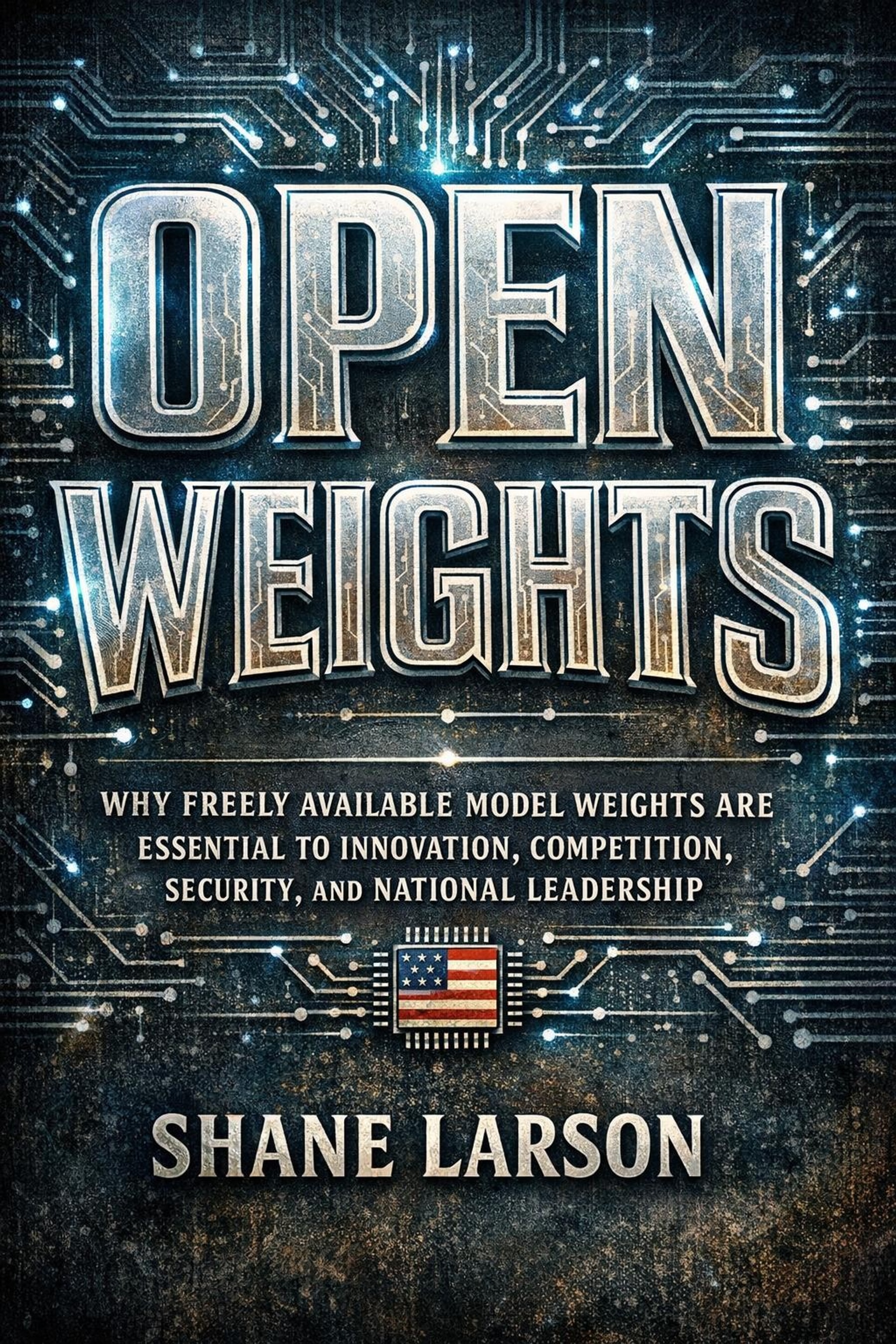
Gumroad Factory 2.0: Automating Cover Art, Landing Pages, and Emails
I sold my first digital product on Gumroad in 2023. It was a PDF about API gateway patterns, the cover looked like it was designed in PowerPoint by...
I sold my first digital product on Gumroad in 2023. It was a PDF about API gateway patterns, the cover looked like it was designed in PowerPoint by someone who'd never opened PowerPoint, and I wrote the sales page copy at 11pm after three bourbons. It made $47 in its first month.
My latest product — a technical reference card for prompt engineering patterns — launched with AI-generated cover art, AI-written sales copy, an automated email sequence, and a landing page that was live within 90 minutes of me deciding the product should exist. It made $340 in its first week.

USB-C for AI Is Already Here. Are You Building With It?
MCP is how Claude, Cursor, and VS Code connect AI to the real world. This is the complete technical guide.
Build Your First MCP Server — $3.99The difference isn't that the second product was better. It's that I built a system — what I've been calling the Gumroad Factory — that removes every bottleneck between "I have an idea for a product" and "it's live and selling." Here's exactly how it works.
Why Most Digital Product Creators Stall Out
Before I walk through the system, let me talk about why it matters. The number one reason developers don't ship digital products isn't lack of ideas or technical skill. It's the friction of everything that isn't the core content.
You write a great guide to Kubernetes networking. Then you need cover art. You don't know Photoshop. You spend three hours fighting Canva. The result is mediocre. Now you need a product description. You stare at the blank text box. You write something generic. You know the email sequence matters but you've never written marketing copy in your life, so you skip it entirely.
Three weeks later you've uploaded a PDF with a bland cover and zero promotional infrastructure. It sells four copies to people who stumbled across it. You conclude that selling digital products doesn't work.
The problem was never the product. The problem was that you're a software engineer trying to do six jobs you're not trained for, and you're doing them manually every single time.
The Gumroad Factory Architecture
Here's what version 2.0 of my pipeline looks like. I'll break down each stage.
Stage 1: Product Ideation and Validation
This part isn't automated, and I don't think it should be. I keep a running list of product ideas in a plain text file. They come from three sources:
- Questions I see repeatedly in forums, Reddit, and Stack Overflow
- Topics where my articles get the most engagement
- Things I've built at work that I had to figure out from scratch because no good reference existed
When I'm ready to build something, I pick from the list based on a simple heuristic: "Would I have paid $9 for this two years ago?" If the answer is yes, I build it. If I have to convince myself, I skip it.
I do run the concept past Claude before I start. Not for validation exactly, but for scope. I describe the product idea and ask it to outline what a buyer would expect to find inside. This catches scope creep early — if the outline suggests a 200-page book when I was thinking of a 20-page reference guide, I know I need to narrow down.
Stage 2: Content Creation
This is still mostly manual, and intentionally so. The actual technical content is where my expertise matters. I'm not going to have AI write a guide about debugging memory leaks in Node.js when I've spent fifteen years actually debugging memory leaks in Node.js.
What I do use AI for at this stage is structure. I'll write the raw content — code examples, explanations, walkthroughs — and then use Claude to help organize it into a logical flow. "Here are 30 tips about PostgreSQL performance tuning. Group them into chapters with a sensible progression from beginner to advanced." That kind of structural editing is where AI saves me hours without compromising the expertise that makes the product worth buying.
Stage 3: Cover Art Generation
This is where the automation really kicks in. Cover art used to be my worst bottleneck. I'm not a designer. I can't draw. Every hour I spent in Canva was an hour I resented.
Now I use DALL-E 3 through the API for initial concepts. My prompt template looks like this:
var coverPrompt = "Professional ebook cover design for a technical guide titled '" +
    productTitle + "'. Style: clean, modern, minimalist. " +
    "Color scheme: dark background with accent color. " +
    "Include subtle technical imagery related to " + topicKeywords + ". " +
    "No text on the image. High contrast. " +
    "Suitable for digital product thumbnail at small sizes.";
The key insight is "no text on the image." DALL-E is still terrible at rendering text, so I generate the background artwork and add text overlay separately using a Node.js script with the canvas library:
var { createCanvas, loadImage } = require("canvas");

function createCover(backgroundPath, title, subtitle, outputPath) {
    var canvas = createCanvas(1600, 2400);
    var ctx = canvas.getContext("2d");

    return loadImage(backgroundPath).then(function(img) {
        ctx.drawImage(img, 0, 0, 1600, 2400);

        // Dark overlay for text readability
        ctx.fillStyle = "rgba(0, 0, 0, 0.6)";
        ctx.fillRect(0, 1600, 1600, 800);

        // Title
        ctx.fillStyle = "#FFFFFF";
        ctx.font = "bold 72px Arial";
        ctx.textAlign = "center";
        wrapText(ctx, title, 800, 1750, 1400, 85);

        // Subtitle
        ctx.font = "36px Arial";
        ctx.fillStyle = "#CCCCCC";
        wrapText(ctx, subtitle, 800, 2100, 1400, 45);

        // Author
        ctx.font = "italic 32px Arial";
        ctx.fillStyle = "#999999";
        ctx.fillText("Shane Larson", 800, 2300);

        var fs = require("fs");
        var buffer = canvas.toBuffer("image/png");
        fs.writeFileSync(outputPath, buffer);
    });
}
I generate three to five variations and pick the best one. The whole process takes about ten minutes instead of three hours. The results aren't designer-quality, but they're professional enough for a Gumroad thumbnail — which is what matters.
For products where I want higher quality art, I'll take the DALL-E output into Midjourney and use it as an image prompt to refine the style. Midjourney's aesthetic sense is better, but DALL-E's API access makes it easier to integrate into automated workflows.
Stage 4: Sales Copy and Landing Pages
This is where Claude earns its keep. Writing sales copy is a skill I respect but don't naturally have. I can explain how something works. I'm less good at explaining why you should buy it.
My prompt structure for sales copy generation:
Product: [title]
Format: [PDF guide / reference card / video course / template pack]
Target buyer: [experienced backend developer / junior frontend dev / etc.]
Price point: [$9 / $19 / $29]
Key differentiator: [what makes this different from free content on the same topic]

Write a Gumroad product description that:
1. Opens with the problem this solves
2. Lists 5-7 specific things the buyer will learn or get
3. Includes a "this is for you if..." section
4. Ends with a low-pressure call to action
5. Tone: knowledgeable but not salesy, technical but accessible
The output needs editing — always — but it gives me a solid draft in 30 seconds. I typically spend another 15 minutes tweaking it to sound like me rather than generic marketing copy. The biggest thing I change is removing the exclamation marks. Claude loves exclamation marks in marketing copy. I don't use them.
For the Gumroad landing page itself, I have a template I reuse. Gumroad's editor is simple enough that I don't need to automate the actual page creation — I just paste in the copy, upload the cover image, set the price, and configure the settings. This takes about five minutes.
Stage 5: Email Sequences
This was the piece I was missing entirely in version 1.0. Email sequences — the automated follow-up messages that go to people after they buy — are where a huge amount of post-purchase revenue comes from. Upsells, cross-sells, review requests, referral prompts. I was leaving all of that on the table.
Now I generate a three-email sequence for every product:
Email 1 (immediate): Thank you + quick start guide. "Here's the one thing to read first."
Email 2 (3 days later): Deeper value delivery. A bonus tip or resource that wasn't in the product. This builds goodwill and reduces refund requests.
Email 3 (7 days later): Soft cross-sell. "If you found [product] useful, you might also like [related product]."
I generate these with Claude using a prompt that includes the product description, the table of contents, and my other available products. The output is surprisingly good — better than what I'd write manually because I'd procrastinate on writing marketing emails until the heat death of the universe.
var emailPrompt = "Write a 3-email post-purchase sequence for a digital product.\n\n" +
    "Product: " + productTitle + "\n" +
    "Contents: " + tableOfContents + "\n" +
    "Related products: " + relatedProducts.join(", ") + "\n\n" +
    "Email 1: Immediate delivery thank-you with quick-start guidance.\n" +
    "Email 2: 3 days later, bonus tip not in the product.\n" +
    "Email 3: 7 days later, soft cross-sell to related product.\n\n" +
    "Tone: friendly, technical, no hype. Author name: Shane.";
Gumroad's workflow automation handles the timing. I just paste the copy into each email template and set the delays.
The Full Pipeline Timing
Here's what the end-to-end timeline looks like for a typical product:
| Stage | Time (v1.0) | Time (v2.0) |
|---|---|---|
| Ideation & scoping | 1-2 hours | 30 min |
| Content creation | 8-20 hours | 8-20 hours (unchanged) |
| Cover art | 3-5 hours | 10-15 min |
| Sales copy | 2-3 hours | 20 min |
| Landing page setup | 1 hour | 5 min |
| Email sequence | Never did it | 15 min |
| Total overhead | 7-11 hours | ~1.5 hours |
The content creation time doesn't change because that's the part that should be done by a human with real expertise. Everything else — the packaging, the marketing, the automation — is where AI collapses the timeline.
Revenue Data: Does This Actually Work?
I'm going to share real numbers because I think the "automated products" space has too much hype and not enough transparency.
Over the past eight months, I've launched eleven products using the Factory 2.0 pipeline. Here's the breakdown:
- 3 products made less than $50 total. These were topics where I misjudged demand.
- 4 products are steady earners at $80-150/month. Not life-changing, but they require zero ongoing effort.
- 3 products hit $200-400/month. These are in sweet spots where search traffic and community recommendations drive consistent sales.
- 1 product (my LLM training patterns reference) consistently does $500+/month. This one has genuine depth that's hard to find elsewhere for free.
Total monthly revenue from Gumroad as of early 2026: roughly $2,100. That's across eleven products with a combined creation time of maybe 200 hours.
Compare that to consulting at $150-200/hour. The hourly rate is lower — about $10/hour if you do the math naively. But the revenue is recurring and the marginal effort is zero. The products sell while I'm fishing or sleeping or working on other things. That's the whole point.
The products that failed are instructive too. The ones that made less than $50 were all topics where abundant free content exists. A PDF about "getting started with Docker" isn't going to sell when Docker's own documentation is excellent. The ones that sell well are in niches where the free content is either scattered, outdated, or too shallow to be useful.
What I'd Do Differently
A few lessons from running this pipeline for eight months:
Price higher. I started most products at $9. The ones I've moved to $15-19 haven't seen a meaningful drop in volume. Technical buyers are not price-sensitive at these levels. They're time-sensitive. If your product saves them two hours of Googling, $19 is nothing.
Spend more time on the product description. The AI-generated copy is a good starting point, but the products that sell best have descriptions I've personally rewritten to be more specific. "Learn 47 PostgreSQL query optimization techniques" sells better than "Master PostgreSQL performance." Specificity converts.
Build bundles. Once you have four or five products in a related space, bundle them. I sell individual reference cards for $9-15 each but offer a bundle of five for $39. The bundle outsells the individual products combined. This is trivial to set up on Gumroad and it requires zero additional content creation.
Don't automate the wrong things. I tried using AI to generate the actual technical content for a product once. It was a reference guide for AWS Lambda best practices. The output was technically correct but bland — it read like documentation, not like advice from someone who'd actually run Lambda in production. I scrapped it and wrote it myself. The Factory automates the packaging, not the expertise.
The Tools
For anyone wanting to replicate this:
- Content: Whatever you're comfortable writing in. I use VS Code with a markdown preview.
- Cover art: DALL-E 3 API for initial generation, node-canvas for text overlay. Midjourney for higher-end art when the product warrants it.
- Sales copy: Claude (Sonnet for drafts, Opus for final polish on important launches).
- Email sequences: Claude for generation, Gumroad Workflows for automation.
- Landing pages: Gumroad's built-in editor. Don't overthink this.
- Analytics: Gumroad's dashboard plus a spreadsheet I update monthly.
Total tooling cost: roughly $40/month for API usage across DALL-E and Claude. The ROI on that $40 is absurd.
Is This Sustainable?
The honest answer is: I don't know. The digital product space is getting more crowded as more people discover these same automation techniques. What I do know is that the products with genuine expertise behind them continue to sell, and the ones that are just repackaged commodity knowledge don't.
My bet is that the bar for quality is going to keep rising. AI makes it trivially easy to create a product, which means the product itself needs to be genuinely useful to stand out. The Factory handles everything around the product — the cover art, the copy, the emails, the distribution. But the thing being distributed still has to be worth buying.
That's the part no pipeline can automate. And honestly, that's fine by me. I'd rather spend my time building things worth selling than fighting with Canva.
Shane is the founder of Grizzly Peak Software and builds digital products from his cabin in Caswell Lakes, Alaska, where the nearest graphic designer is approximately 200 miles away.