Over-50 Side Hustle Stack: Low-Effort, High-Reward Tools
Here's a truth that most side hustle advice ignores: when you're over fifty, you don't have the same tolerance for busywork that you did at twenty-five.
Here's a truth that most side hustle advice ignores: when you're over fifty, you don't have the same tolerance for busywork that you did at twenty-five.
You've got experience. You've got judgment. You've probably got a decent income already. What you don't have is infinite patience for app-of-the-week hustles that require you to learn a new platform, build an audience from scratch, and grind for eighteen months before seeing a dime.
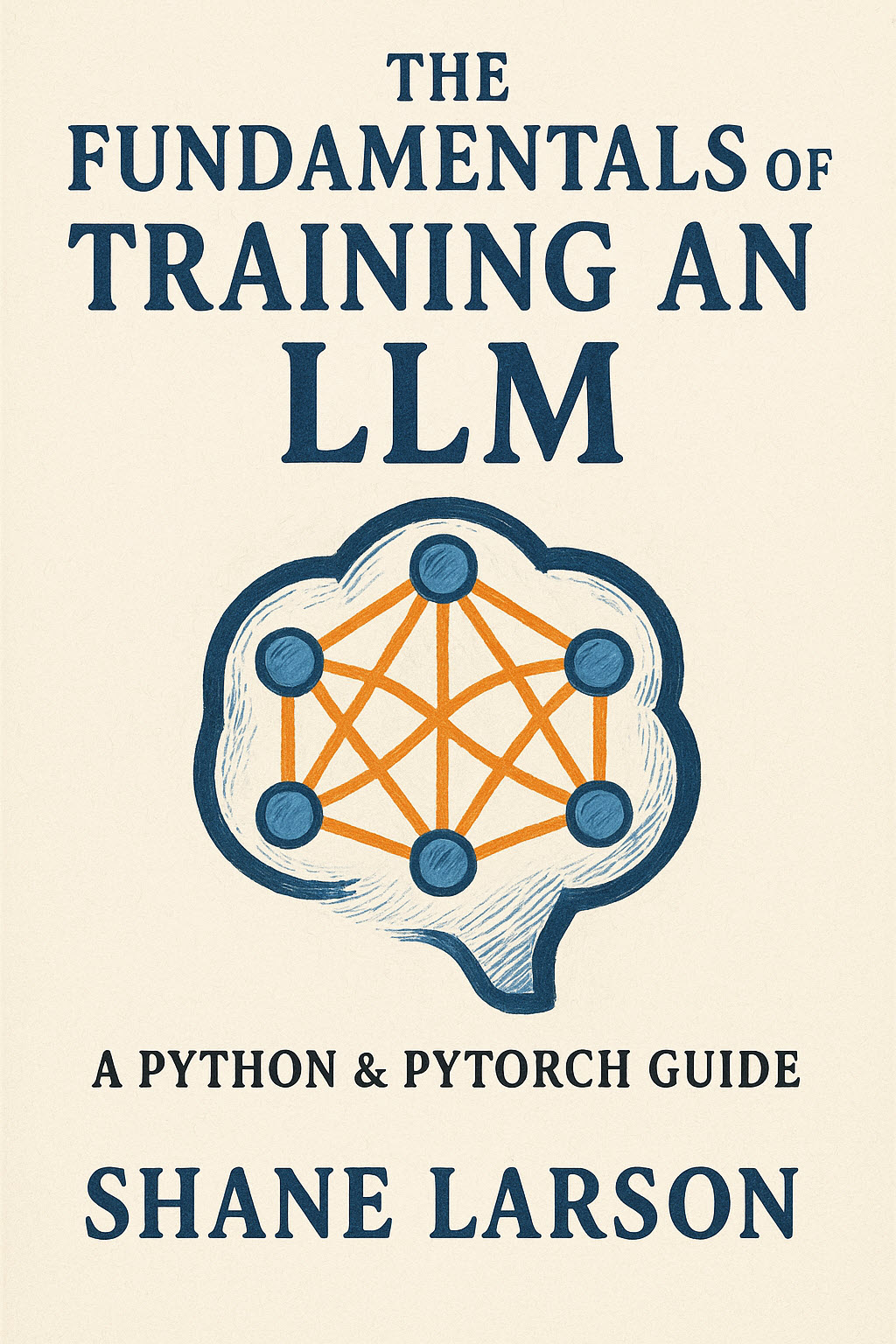
The Fundamentals of Training an LLM: A Python & PyTorch Guide
Build a GPT-style transformer from scratch in Python. Learn how LLMs actually work through hands-on code. No ML experience required.
Learn MoreI've been running side projects alongside my main work for years now — from Grizzly Peak Software to AutoDetective.ai to various experiments that didn't survive first contact with reality. Along the way I've developed strong opinions about which tools actually deliver value for experienced engineers who want to generate additional income without turning their evenings and weekends into a second full-time job.
This is my current stack. Every tool on this list earns its place by being genuinely low-effort to maintain while producing real revenue or compounding value over time.
The Philosophy: Leverage Over Labor
Before I get into specifics, let me explain what I mean by "low-effort, high-reward" because the phrase sounds like a get-rich-quick promise and that's not what this is.
Low-effort means the ongoing maintenance cost is minimal. Setup might take real work — sometimes significant work. But once it's running, it shouldn't require constant attention to keep producing value.
High-reward means either direct revenue or the creation of assets that compound. An article that generates traffic for years is high-reward. A social media post that gets attention for twelve hours is not.
The key insight for over-fifty engineers: your unfair advantage is depth of knowledge. You've spent decades accumulating expertise that younger engineers literally cannot have yet. The best side hustles for people like us are the ones that convert existing knowledge into recurring value with minimal ongoing effort.
Tier 1: The Foundation Tools
These are the tools I consider essential. They form the base layer that everything else builds on.
A Simple Content Website (Node.js + Express or Equivalent)
I built grizzlypeaksoftware.com on a straightforward Node.js and Express stack with Pug templates, hosted on DigitalOcean. Total hosting cost is under twenty dollars a month. The site generates traffic through articles on topics I genuinely know about — API development, AI applications, software architecture.
The key here isn't the tech stack. It's owning the platform. If you're building on Medium or Substack or LinkedIn, you're building on rented land. Your content is subject to their algorithm changes, their monetization decisions, their policy updates. A simple self-hosted site that you control is the single most important asset in the stack.
Here's the bare minimum setup:
var express = require('express');
var app = express();

app.set('view engine', 'pug');
app.use(express.static('static'));

app.get('/', function(req, res) {
    res.render('index', {
        title: 'Your Site Name',
        articles: getRecentArticles()
    });
});

app.get('/articles/:slug', function(req, res) {
    var article = getArticleBySlug(req.params.slug);
    if (!article) return res.status(404).render('404');
    res.render('article', { article: article });
});

app.listen(process.env.PORT || 8080, function() {
    console.log('Running on port ' + (process.env.PORT || 8080));
});
That's a website. Add a CMS like Contentful for content management and you've got a publishing platform that costs almost nothing to run and gives you complete control.
The effort profile: significant upfront build (a weekend or two), then minimal maintenance. I spend maybe an hour a month on infrastructure. The ongoing effort is content creation, which I'll address separately.
A Headless CMS (Contentful, Strapi, or PostgreSQL)
Content management needs to be frictionless or you'll stop creating content. I started with Contentful, which is excellent for the free tier. More recently I've been using PostgreSQL directly for newer features because it gives me more control over the data model.
The point isn't which CMS you pick. The point is that publishing new content should take minutes, not hours. If writing an article and getting it live on your site requires SSH-ing into a server and editing files, you'll do it once a month. If it requires pasting markdown into a CMS and clicking publish, you'll do it weekly.
SEO Fundamentals (Not the Snake Oil Kind)
Most SEO advice is garbage. Here's what actually matters for a content site run by a technical person:
Structured data. JSON-LD for articles, breadcrumbs, and organization. This isn't optional anymore — it directly affects how search engines understand and display your content.
var structuredData = {
    "@context": "https://schema.org",
    "@type": "Article",
    "headline": article.title,
    "author": {
        "@type": "Person",
        "name": "Shane Larson"
    },
    "datePublished": article.publishDate,
    "publisher": {
        "@type": "Organization",
        "name": "Grizzly Peak Software"
    }
};
Clean URLs. Dynamic XML sitemaps. Proper canonical tags. Meta descriptions that are actually useful. None of this is complicated. All of it compounds over months and years.
The SEO effort profile: a few hours to set up properly, then it runs automatically. The sitemap generates itself. The structured data is templated. You think about it once and then forget about it.
Tier 2: Revenue Generators
These are the tools that convert traffic and expertise into actual money.
Affiliate Programs (Amazon Associates and Relevant Tech Products)
I know, I know. Affiliate marketing has a reputation problem. But here's the thing: if you're writing genuinely useful technical content and you mention tools and products you actually use, affiliate links are a service to your readers, not a grift.
Amazon Associates is the obvious starting point. The commission rates are modest — typically 1 to 4 percent — but the conversion rates are decent because people trust Amazon's checkout process. Every product mention in your content becomes a potential revenue source.
The implementation is dead simple. I built a utility function that appends my tracking ID to Amazon URLs:
var AMAZON_TAG = process.env.AMAZON_DEFAULT_TAG || 'yourtag-20';

function addAmazonTag(url) {
    if (!url || url.indexOf('amazon.com') === -1) return url;
    var separator = url.indexOf('?') === -1 ? '?' : '&';
    return url + separator + 'tag=' + AMAZON_TAG;
}

module.exports = { addAmazonTag: addAmazonTag };
Beyond Amazon, look at affiliate programs for tools you genuinely use and recommend. DigitalOcean, various SaaS products, technical books — most have affiliate programs with better commission rates than Amazon.
The effort profile: zero ongoing effort once the links are in your content. Write honest reviews and recommendations, include affiliate links, and let the traffic do the work.
Technical Books (Self-Published)
I've published a technical book about training LLMs. The process of writing a technical book is genuinely difficult. But once it exists, it's an asset that generates revenue indefinitely with zero maintenance.
Self-publishing through Amazon KDP means you keep a much larger percentage of each sale than traditional publishing. The trade-off is that you handle everything yourself — editing, formatting, cover design, marketing.
For experienced engineers, the content is the easy part. You already know the material. The hard part is organizing it into a coherent narrative and sitting down to actually write it.
My advice: start with a topic you've explained to junior engineers dozens of times. If you can explain it in conversation, you can write it in a book. The first draft doesn't have to be good. It just has to exist.
Display Advertising (Once You Have Traffic)
I run a lightweight ad system on Grizzly Peak Software. It's self-managed — I built a simple admin interface that lets me create ads with image upload, track impressions and clicks, and manage placements across the site.
The advantage of self-managed ads over Google AdSense is control. I decide what appears on my site. The disadvantage is that you need to find your own advertisers or use the ad space for your own products and affiliate promotions.
For most over-fifty engineers starting a side hustle, I'd recommend using ad space for your own products first. Promote your book, your course, your consulting services. Once you have enough traffic to attract external advertisers, you can open it up.
Tier 3: Force Multipliers
These tools amplify everything else in the stack.
AI-Assisted Content Creation
I use AI tools extensively in my content creation workflow. Not to write articles — the voice and experience need to be authentic — but for research, outlining, editing, and handling the mechanical parts of publishing.
The workflow that works for me: I write the first draft based on genuine experience and opinions. Then I use AI to help with editing, catching logical gaps, and formatting. The result is content that's authentically mine but produced much faster than if I did everything manually.
For code examples in articles, AI assistance is even more valuable. I can describe the concept I want to demonstrate and get a working code example in seconds, then customize it to fit the article's context.
Automated Content Publishing Pipelines
If you're producing content regularly, automating the publishing pipeline saves enormous time. My setup handles the journey from markdown file to published article with minimal manual intervention.
The components: a content management system for storage, a build pipeline for processing markdown into HTML, structured data generation for SEO, and sitemap updates. Each piece is simple on its own. Together they mean that publishing an article is a five-minute task instead of a thirty-minute task.
Over the course of a year, at one article per week, that's the difference between twenty-six hours and four hours of publishing overhead. That's real time reclaimed.
Email List (Even a Small One)
I'll be honest — I've been slow to build an email list, and I regret it. An email list is the one audience channel you truly own. Social media algorithms change. Search rankings fluctuate. But an email list is a direct line to people who've explicitly said they want to hear from you.
The setup is simple. A sign-up form on your site, a basic subscriber model in your database, and periodic emails with your best content. You don't need Mailchimp or ConvertKit to start — a simple Node.js script that sends emails via an SMTP service works fine for a small list.
var subscriberModel = require('./models/subscriberModel');

function addSubscriber(email, name) {
    return subscriberModel.create({
        email: email,
        name: name,
        subscribedAt: new Date(),
        active: true
    });
}
The effort profile: fifteen minutes to set up the form, then whatever time you spend writing emails. Even one email per month keeps you in front of your audience.
What I'd Skip
Not every popular side hustle tool is worth your time, especially after fifty. Here's what I've tried and abandoned.
Social media as a primary channel. I'm not saying don't use social media. I'm saying don't build your entire side hustle on it. The algorithm treadmill is exhausting and the content has no shelf life. An article on your own site generates traffic for years. A tweet generates engagement for hours.
Course platforms with high ongoing maintenance. I've seen the "create a course" advice everywhere. The problem is that good courses require constant updating to stay relevant, especially in tech. A course that was current six months ago is outdated today. Unless you're willing to treat course maintenance as an ongoing commitment, the ROI degrades fast.
Dropshipping, print-on-demand, and other commodity businesses. These require significant operational effort and compete primarily on price. Your competitive advantage as an experienced engineer is expertise, not operations. Stay in your lane.
Freelance marketplaces like Fiverr and Upwork. The race to the bottom on pricing makes these untenable for experienced professionals. Your hourly rate should reflect your thirty-plus years of experience, and marketplace dynamics push prices in the wrong direction.
The Compound Effect
The real power of this stack isn't any individual tool. It's how they interact and compound over time.
An article on your site generates search traffic. That traffic sees your book recommendation with an affiliate link. Some percentage buys the book. Some percentage subscribes to your email list. Your email list drives traffic back to new articles. The cycle reinforces itself.
After six months, you start to see the compounding. After a year, it's significant. After two years, you have an asset that generates meaningful passive income from the accumulated work of hundreds of small efforts.
This is fundamentally different from trading time for money, which is what most side hustles actually are. The stack I'm describing builds equity. Every article, every subscriber, every piece of content is an asset that continues producing value long after the initial effort.
Getting Started This Weekend
If you're an experienced engineer over fifty and you want to start building a side hustle stack, here's what I'd do this weekend:
Saturday morning: Buy a domain name and set up a basic Express site on DigitalOcean. Doesn't have to be pretty. Has to exist.
Saturday afternoon: Write one article about something you know deeply — a technology you've used for years, a pattern you've seen succeed or fail, a lesson from a project that went sideways.
Sunday: Set up basic SEO — structured data, sitemap, meta tags. Sign up for Amazon Associates. Add affiliate links to any products you mentioned in your article.
That's it. You've got a functioning content site with monetization in place. Everything from here is incremental improvement and consistent content creation.
The tools will evolve. The platforms will change. But the fundamental strategy — converting deep expertise into durable digital assets — is the highest-leverage play available to experienced engineers. And unlike the hustle culture that burned us out in the first place, this approach actually gets easier over time.
Shane is the founder of Grizzly Peak Software, a technical resource hub for software engineers. He builds from a cabin in Alaska.