Zero-Budget Launch: How I Got 500 Signups Without Ads
Everybody wants to talk about growth hacking. Nobody wants to talk about what happens when you have literally zero dollars to spend on it.
Everybody wants to talk about growth hacking. Nobody wants to talk about what happens when you have literally zero dollars to spend on it.
I launched AutoDetective.ai with no ad budget, no VC money, no marketing team, and no existing audience in the automotive space. Within 60 days, I had over 500 signups on the email list, 8,000+ pages indexed in Google, and organic traffic that was growing 15-20% week over week. Total spend on marketing: zero dollars.
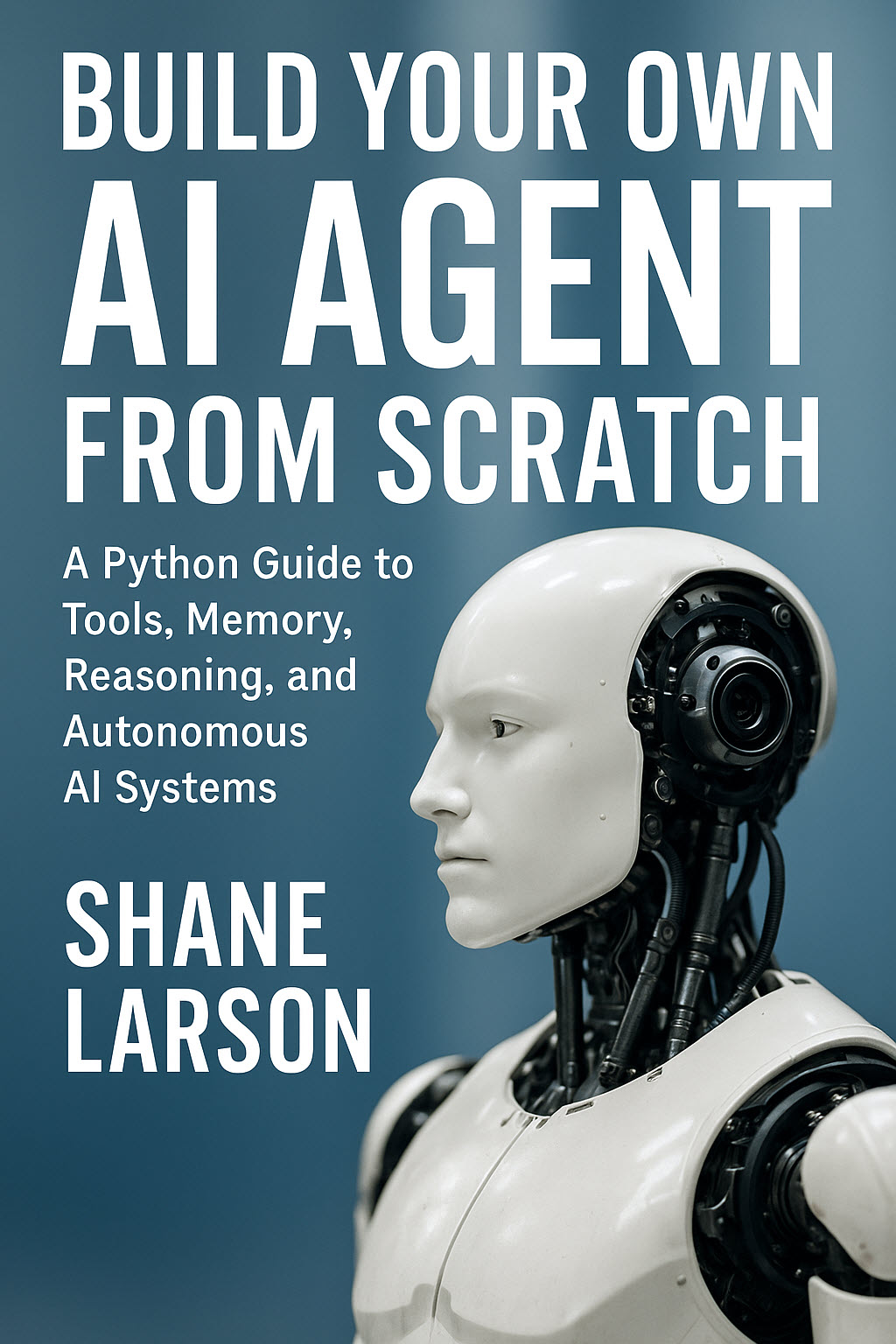
Build Your Own AI Agent From Scratch
Build a complete AI agent from scratch in Python — no frameworks, no hype. 16 chapters covering tools, memory, reasoning, MCP, multi-agent systems & more.
Learn MoreNot "low budget." Zero.
I'm not saying this to brag. I'm saying it because the conventional startup advice — run Facebook ads, hire a growth marketer, raise a seed round so you can buy attention — is completely disconnected from the reality of how solo developers actually build things. Especially solo developers who live in a cabin in Alaska and would rather spend money on firewood than Facebook.
Here's exactly what I did, what worked, what was a complete waste of time, and the specific numbers behind it all.
The Product: Quick Context
AutoDetective.ai is a programmatic SEO site targeting automotive diagnostics queries. If your check engine light comes on and you Google "P0420 catalyst system efficiency below threshold Honda Civic," you might land on one of my pages. Each page is a 4,000-6,000 word deep dive written by a frontier AI model, edited for accuracy, and structured to actually help someone fix their car.
The "signups" I'm talking about are email list subscribers who opted in for a free diagnostic guide and ongoing automotive tips. These aren't vanity metrics — they're real people who typed in an email address because they found value in what I built.
Week 1-2: SEO as the Foundation (Not an Afterthought)
Most people treat SEO as something you bolt on after you build. That's backwards. SEO was the architecture of the entire project.
Before I wrote a single line of application code, I spent three days doing keyword research. Not with expensive tools — I used Google's autocomplete, the "People also ask" section, and free tiers of Ubersuggest and Google Search Console. I identified about 15,000 long-tail queries in the automotive diagnostics space that had search volume but almost no competition.
Here's the thing about programmatic SEO that most people miss: you're not competing with big sites on head terms. You're going after the endless long tail where nobody has bothered to create quality content. "P0456 evaporative emission system small leak Subaru Outback 2019" — nobody at AutoZone is writing a dedicated 5,000-word page about that specific combination.
The numbers from SEO alone:
- Week 1: 47 pages indexed, ~200 organic visits
- Week 2: 340 pages indexed, ~1,100 organic visits
- Week 4: 2,400 pages indexed, ~8,500 organic visits
- Week 8: 8,000+ pages indexed, ~31,000 organic visits
By week 8, SEO was driving about 85% of all traffic. No ads. No social media magic. Just pages that answered specific questions better than anything else on the internet.
Signups from organic search: ~310 of the 500 total. Over 60%.
The lesson: if you're building a content-driven product, SEO isn't a channel. It's the channel. Everything else is supplementary.
Reddit: The Surprising Second Place
I almost didn't bother with Reddit. I've seen too many people get banned for self-promotion, and the culture there can be hostile toward anything that smells like marketing.
But I had an advantage: I actually know things about cars. Thirty years of fixing my own vehicles in places where the nearest mechanic is a hundred miles away teaches you things.
My strategy was simple and it wasn't clever:
- Find subreddits where people ask about car problems (r/MechanicAdvice, r/AskMechanics, r/CartalkUK, specific model subreddits)
- Answer their questions thoroughly and genuinely
- When directly relevant, mention that I built a tool for exactly this kind of diagnosis
- Never, ever post just a link
I spent maybe 30 minutes a day doing this for about three weeks. Not grinding it — just checking in, answering a few questions, being useful.
The numbers:
- Total Reddit-referred visits over 8 weeks: ~4,200
- Signups from Reddit traffic: ~85
- Best single comment: an answer about diagnosing a misfiring Subaru that got 340 upvotes and drove 1,100 visits in one day
- Posts where I got called a spammer: 2 (both times I was too aggressive with the link — lesson learned)
The key insight about Reddit: you can't automate authenticity. The comments that drove traffic were genuinely helpful. The ones where I was obviously trying to funnel people to my site got downvoted or ignored.
X/Twitter Threads: Modest but Compounding
I had about 1,200 followers on X when I launched. Not a big audience. Mostly other developers and a few people who followed me from technical writing I'd done.
I wrote seven threads over the launch period. Here's what worked and what didn't:
Threads that worked:
- "I built a site with 8,000 pages in 30 days. Here's the architecture." (Thread about the technical build — 45K impressions, 180 link clicks)
- "Why I moved to Alaska and started building software products from a cabin" (Personal story thread — 62K impressions, 220 link clicks, but lower conversion to signups)
- "The economics of programmatic SEO in 2026" (Data-heavy thread — 28K impressions, 95 link clicks)
Threads that flopped:
- "Check out my new automotive diagnostics site!" (Direct promotion — 3K impressions, 12 clicks. Nobody cares about your launch.)
- "5 things I learned about AI content generation" (Too generic — 8K impressions but almost no clicks through)
Total signups from X/Twitter: ~40
Honestly? Forty signups from probably 15 hours of writing threads is not great ROI. But those threads had a secondary benefit I didn't expect: three people DMed me about partnerships or collaboration. One of those turned into a backlink from a site with high domain authority, which boosted SEO further.
X is a long game. It's not a launch channel for most people.
Hacker News: One Shot, Make It Count
I submitted AutoDetective.ai to Hacker News exactly once. The title was "Show HN: I built 8,000 automotive diagnostic pages with programmatic SEO."
It hit the front page and stayed there for about six hours.
The numbers:
- Total visits from HN that day: ~4,800
- Signups: ~45
- Comments: 67 (a mix of genuine technical interest, people calling programmatic SEO spam, and the usual HN contrarianism)
Here's what I learned about Hacker News: the audience is technical, skeptical, and opinionated. They don't care about your product — they care about the how. The reason my post did well is that I wrote a detailed comment explaining the architecture: the data pipeline, the content generation approach, the quality control system, the deployment strategy.
If I'd just posted "here's my site," it would have gotten two upvotes and disappeared.
Important caveat: HN traffic converts poorly. The bounce rate was about 78%. People come, they look, they leave. The 45 signups from nearly 5,000 visits is a conversion rate under 1%. Compare that to organic search traffic, which converted at about 3.6%.
Still, 45 free signups and a bunch of high-quality backlinks from people who wrote about the project afterward? I'll take it.
Product Hunt: The Biggest Waste of Time
I launched on Product Hunt on a Tuesday (supposedly the best day). I spent four hours writing the description, making screenshots, preparing a launch-day plan.
The results:
- 23 upvotes
- ~180 visits to the site
- 3 signups
- Time spent: 4 hours of preparation, 2 hours of launch-day engagement
Three signups. From six hours of work. That's the worst ROI of anything I tried.
The problem with Product Hunt in 2026 is that it's become pay-to-play. The products that get to the top of the leaderboard have teams coordinating upvote campaigns, reaching out to their networks, running social media pushes. A solo developer posting a niche automotive tool has no chance against a well-funded SaaS with 50 employees all upvoting on launch day.
I'm not bitter about it. I just want to save you the time. Unless you're in a space where the Product Hunt audience is your actual target market (developer tools, productivity apps, design tools), skip it.
What Didn't Work at All
Let me save you some time on things I tried that produced essentially nothing:
Cold email outreach to automotive bloggers: Sent 30 personalized emails to car bloggers and YouTube mechanics. Got 2 replies, both polite "no thanks." Zero traffic, zero signups. Cold outreach for content sites is dead unless you have something extraordinary to offer them.
Facebook Groups: I joined three automotive enthusiast groups and tried the same approach I used on Reddit — be helpful, mention the tool when relevant. Facebook groups are a different beast. The engagement is lower, the moderation is stricter about links, and the audience skews toward people who want to share photos of their cars, not diagnose engine codes.
Guest posting pitches: I pitched five automotive sites about writing a guest article. One responded. The article was published three weeks later and drove 12 visits. Guest posting works for some niches, but for automotive diagnostics, the audience overlap isn't there.
LinkedIn: I posted twice about the launch. Got some congratulatory comments from connections. Zero measurable traffic. LinkedIn is great for B2B; it's useless for a consumer-facing automotive tool.
The Timeline That Actually Mattered
Here's the honest timeline:
- Day 1-7: Built the site and initial content pipeline. No marketing.
- Day 8-14: Started publishing pages. Submitted sitemap to Google. Wrote first two X threads.
- Day 15-21: Reddit engagement began. First pages started ranking.
- Day 22-28: HN submission. Product Hunt launch. X threads continued.
- Day 29-45: SEO kicked in hard. Organic traffic went from hundreds to thousands per day.
- Day 46-60: Compounding effects. Reddit answers from weeks ago started ranking in Google themselves. Old X threads got reshared.
The compounding is the part people don't talk about. By week 6, I was getting signups from things I'd written in week 2. Content marketing isn't a faucet you turn on — it's a snowball you push downhill.
The Real Numbers Summary
| Channel | Time Invested | Visits | Signups | Cost | |---------|--------------|--------|---------|------| | Organic SEO | 40+ hours | 42,000+ | ~310 | $0 | | Reddit | ~10 hours | 4,200 | ~85 | $0 | | Hacker News | ~3 hours | 4,800 | ~45 | $0 | | X/Twitter | ~15 hours | 2,400 | ~40 | $0 | | Product Hunt | ~6 hours | 180 | 3 | $0 | | Other (cold email, FB, guest posts, LinkedIn) | ~12 hours | ~400 | ~17 | $0 |
Total: ~86 hours of effort, 500+ signups, $0 spent.
That's about $0 per signup and roughly 5.8 signups per hour of work invested. If you focus only on the channels that actually worked (SEO, Reddit, HN), the efficiency jumps to about 8.3 signups per hour.
What I'd Do Differently
If I did this again tomorrow, I'd cut Product Hunt, cold email, Facebook, and LinkedIn immediately. That's 18 hours I'd redirect toward:
- More Reddit engagement. The ROI there was excellent and I left upside on the table by stopping after three weeks.
- YouTube. I didn't try it because I don't love being on camera, but short-form diagnostic videos would have been perfect for this niche. A two-minute video showing how to read an OBD code and linking to the full diagnostic guide? That's probably the biggest missed opportunity.
- Building an email course. Instead of just a PDF download as the lead magnet, I should have built a 5-day email sequence about basic car diagnostics. Higher perceived value, better conversion rate, and it gives me an excuse to stay in people's inboxes.
The Uncomfortable Truth About Zero-Budget Launches
Here's what nobody selling you a marketing course wants to admit: the reason my zero-budget launch worked is because the product was genuinely useful.
No amount of clever distribution hacks will save a product that doesn't solve a real problem. I've seen beautifully executed launch campaigns for products that nobody needs. They spike on day one and flatline by day seven.
The 310 signups from organic search didn't come because I'm some SEO wizard. They came because someone's check engine light was on, they Googled their specific error code, they found a page that actually explained what was wrong in plain English, and they thought, "This is useful enough that I want more of it."
That's the entire strategy. Build something useful. Put it where people are looking. Don't spend money you don't have.
It's not sexy. It won't get you on the cover of TechCrunch. But 500 real humans who voluntarily gave you their email address because they found value in what you built? That's a foundation you can grow on.
And you can do it from a cabin in Alaska without spending a dime.
Shane Larson is a software engineer, writer, and the founder of Grizzly Peak Software. He builds software products from a remote cabin in Caswell Lakes, Alaska, where the nearest coffee shop is 45 minutes away and the WiFi is powered by stubbornness.