Advanced AI Agent Architectures in JavaScript
A JavaScript-first guide to AI agents—what they are, how single-agent systems work, and when to scale into multi-agent architectures for real-world applications.
From Single-Agent Flows to Collaborative AI Teams
Author: Shane Larson Practicing Software Engineer · AI Systems Builder · Hiring Manager
Most developers first encounter AI through a simple pattern:
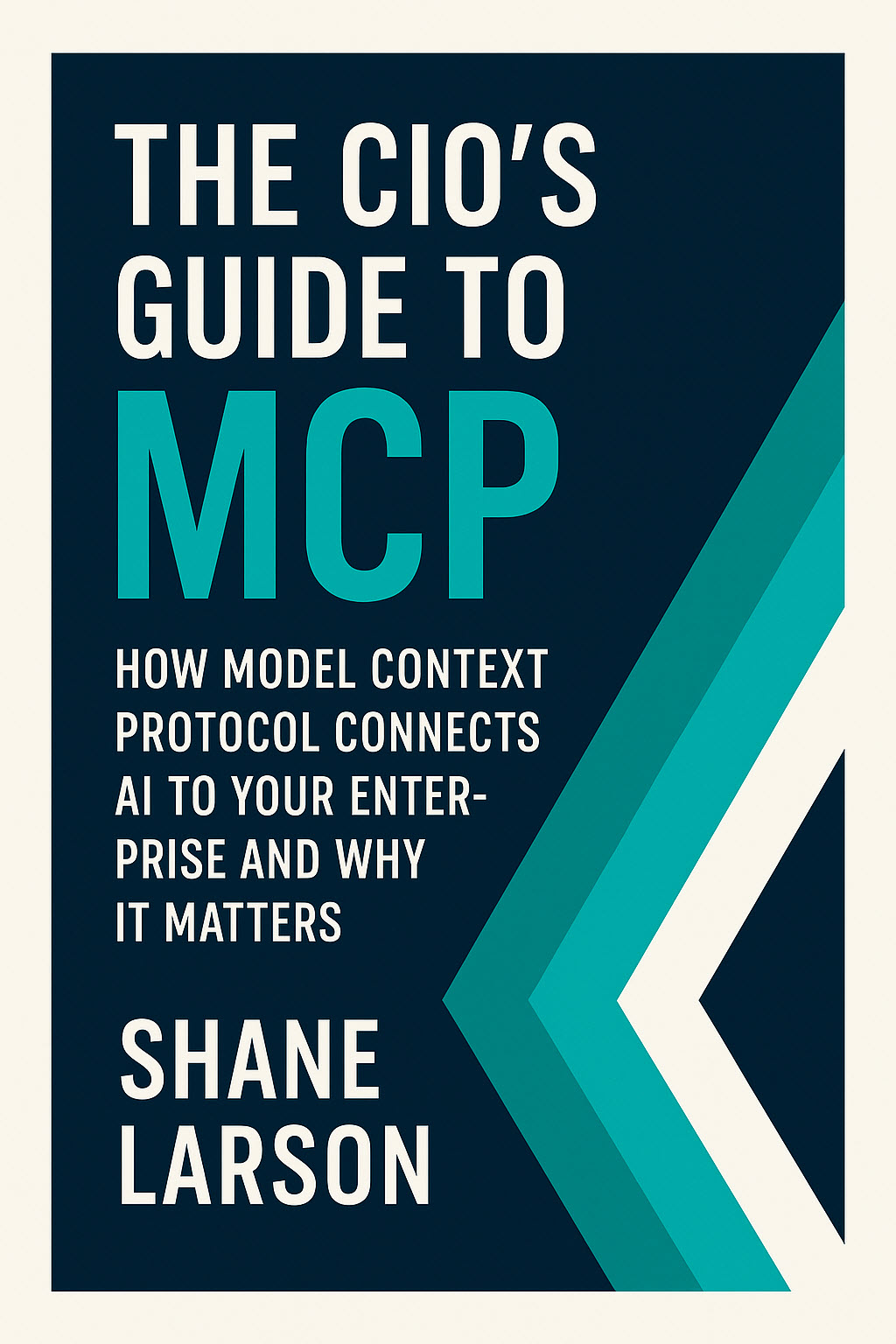
The CIOs Guide to MCP: How Model Context Protocol Connects AI to Your Enterprise and Why It Matters
Stop building custom AI integrations. MCP is the universal standard adopted by Anthropic, OpenAI, Google, Microsoft. CIO guide to enterprise adoption.
Learn MorePrompt in → response out.
That approach works surprisingly well for demos and experiments. But it starts to fall apart the moment you try to build real systems—systems that need to be reliable, auditable, maintainable, and understandable by other engineers.
If you've ever attempted to build:
- an AI code reviewer
- a data analysis assistant
- an internal automation tool
- a decision-support or compliance system
you've probably discovered that prompt engineering alone is not enough.
This is where AI agents—and eventually multi-agent architectures—become essential.
In this article, we'll start from first principles, assuming little to no prior exposure to agents, and progressively work toward advanced multi-agent systems including the Model Context Protocol (MCP) and Agent-to-Agent (A2A) communication patterns, all from a JavaScript / Node.js perspective.

Table of Contents
- What Is an AI Agent? (Plain English)
- Why AI Agents Matter for JavaScript Developers
- Single-Agent Architecture: The Foundation
- Building a Production-Ready Single Agent
- Where Single-Agent Systems Break Down
- Tool Integration and the Model Context Protocol (MCP)
- Multi-Agent Architecture Explained
- Agent-to-Agent Communication Patterns
- Example: A Collaborative Code Review Agent Team
- Advanced Multi-Agent Patterns with MCP
- Single vs Multi-Agent: Choosing the Right Model
- Final Thoughts & What to Explore Next
What Is an AI Agent? (Plain English)
An AI agent is not just a chatbot.
At its core, an agent is:
A language model wrapped in software structure, constraints, and responsibility.
A production-grade agent typically has:
- A defined role (what it's responsible for)
- A goal (what success looks like)
- Context (what information it has right now)
- Tools (functions, APIs, databases, files)
- Memory (state across interactions)
- Communication protocols (how it interacts with other agents)
If you're a software engineer, the best mental model is this:
An AI agent is a service with reasoning capabilities.
This framing is important because it moves AI out of the "prompt playground" and into system design, where it belongs.
Why AI Agents Matter for JavaScript Developers
JavaScript developers are especially well-positioned to build agent-based systems:
- Node.js excels at orchestration and glue code
- Async workflows map naturally to agent execution
- Integrating APIs, CLIs, queues, and databases is trivial
- Agents align cleanly with microservice architecture
- Rich ecosystem for protocol implementations (WebSocket, SSE, gRPC)
If you already build backend services, AI agents are not a radical shift—they're simply a new abstraction layer.
Single-Agent Architecture: The Foundation
Before we talk about agent "teams," we need to understand single-agent flows. Every multi-agent system is built on top of these fundamentals.
Conceptual Flow
- An input arrives (user request, webhook, event)
- The system constructs a prompt with relevant context
- The LLM reasons about the task
- Tools are invoked as needed
- Results are aggregated and returned
This simple loop powers:
- AI chatbots
- Code generators
- Summarization pipelines
- Classification systems
Building a Production-Ready Single Agent
Let's build a real-world agent that goes beyond basic prompt-response patterns.
import Anthropic from "@anthropic-ai/sdk";

class ProductionAgent {
  constructor(config) {
    this.client = new Anthropic({
      apiKey: process.env.ANTHROPIC_API_KEY
    });
    this.role = config.role;
    this.tools = config.tools || [];
    this.conversationHistory = [];
  }

  async execute(input, context = {}) {
    const systemPrompt = this.buildSystemPrompt(context);

    this.conversationHistory.push({
      role: "user",
      content: input
    });

    let response = await this.client.messages.create({
      model: "claude-sonnet-4-20250514",
      max_tokens: 4096,
      system: systemPrompt,
      messages: this.conversationHistory,
      tools: this.tools.map(t => t.definition)
    });

    // Handle tool use loop
    while (response.stop_reason === "tool_use") {
      const toolUse = response.content.find(c => c.type === "tool_use");
      const tool = this.tools.find(t => t.definition.name === toolUse.name);

      const toolResult = await tool.execute(toolUse.input);

      this.conversationHistory.push({
        role: "assistant",
        content: response.content
      });

      this.conversationHistory.push({
        role: "user",
        content: [{
          type: "tool_result",
          tool_use_id: toolUse.id,
          content: JSON.stringify(toolResult)
        }]
      });

      response = await this.client.messages.create({
        model: "claude-sonnet-4-20250514",
        max_tokens: 4096,
        system: systemPrompt,
        messages: this.conversationHistory,
        tools: this.tools.map(t => t.definition)
      });
    }

    const finalResponse = response.content
      .filter(c => c.type === "text")
      .map(c => c.text)
      .join("\n");

    this.conversationHistory.push({
      role: "assistant",
      content: finalResponse
    });

    return {
      response: finalResponse,
      toolsUsed: this.conversationHistory
        .flatMap(m => m.content)
        .filter(c => c?.type === "tool_use")
        .map(c => c.name)
    };
  }

  buildSystemPrompt(context) {
    return `${this.role}

Current context: ${JSON.stringify(context, null, 2)}

You have access to tools to help complete your tasks. Use them when appropriate.
Be thorough, accurate, and provide detailed reasoning.`;
  }
}

// Usage example
const codeReviewer = new ProductionAgent({
  role: "You are a senior JavaScript engineer specializing in code quality and security.",
  tools: [
    {
      definition: {
        name: "run_eslint",
        description: "Run ESLint on JavaScript code and return violations",
        input_schema: {
          type: "object",
          properties: {
            code: { type: "string", description: "The JavaScript code to lint" }
          },
          required: ["code"]
        }
      },
      execute: async ({ code }) => {
        // ESLint implementation
        return { violations: [], warnings: [] };
      }
    }
  ]
});

const result = await codeReviewer.execute(
  "Review this code for issues:\n\n" + sourceCode,
  { project: "api-server", language: "javascript" }
);
This agent demonstrates:
- State management via conversation history
- Tool orchestration with proper result handling
- Context injection for task-specific information
- Iterative reasoning through tool use loops
Where Single-Agent Systems Break Down
Single agents start to struggle when:
- Tasks require multiple perspectives or domain expertise
- Accuracy and validation are critical
- Outputs must be reviewed or audited by specialized roles
- The problem space is too large for one context window
- Different subtasks require different temperatures or model parameters
Common examples:
- Code review (style, security, performance, tests)
- Security analysis (static analysis, runtime checks, compliance)
- Financial decision support (risk assessment, regulatory compliance, forecasting)
- Medical diagnosis systems (symptoms, tests, differential diagnosis)
You can try to stuff everything into one giant prompt—but that usually leads to:
- Brittle results that depend on prompt engineering magic
- Inconsistent reasoning across subtasks
- Poor debuggability and observability
- Difficulty parallelizing work
- No clear ownership of specific outcomes
Tool Integration and the Model Context Protocol (MCP)
The Model Context Protocol (MCP) is a standardized way for AI agents to interact with external systems and data sources. Think of it as a universal adapter layer between language models and the tools they need.
Why MCP Matters
Before MCP, every tool integration was bespoke:
- Custom schemas for each API
- Proprietary authentication flows
- Inconsistent error handling
- No standardized way to expose capabilities
MCP solves this by providing:
- Standardized tool definitions using JSON Schema
- Resource discovery (what tools are available)
- Prompt templates for context injection
- Sampling delegation (tools can request model calls)
MCP in JavaScript
Here's a practical MCP server implementation:
import { Server } from "@modelcontextprotocol/sdk/server/index.js";
import { StdioServerTransport } from "@modelcontextprotocol/sdk/server/stdio.js";
import {
  CallToolRequestSchema,
  ListToolsRequestSchema,
} from "@modelcontextprotocol/sdk/types.js";

class GitHubMCPServer {
  constructor() {
    this.server = new Server(
      {
        name: "github-tools",
        version: "1.0.0",
      },
      {
        capabilities: {
          tools: {},
        },
      }
    );

    this.setupHandlers();
  }

  setupHandlers() {
    // List available tools
    this.server.setRequestHandler(ListToolsRequestSchema, async () => ({
      tools: [
        {
          name: "create_pr",
          description: "Create a pull request on GitHub",
          inputSchema: {
            type: "object",
            properties: {
              repo: { type: "string" },
              title: { type: "string" },
              body: { type: "string" },
              base: { type: "string" },
              head: { type: "string" }
            },
            required: ["repo", "title", "base", "head"]
          }
        },
        {
          name: "review_pr",
          description: "Get PR details and file changes",
          inputSchema: {
            type: "object",
            properties: {
              repo: { type: "string" },
              pr_number: { type: "number" }
            },
            required: ["repo", "pr_number"]
          }
        }
      ]
    }));

    // Execute tool calls
    this.server.setRequestHandler(CallToolRequestSchema, async (request) => {
      const { name, arguments: args } = request.params;

      if (name === "create_pr") {
        const result = await this.createPullRequest(args);
        return {
          content: [{ type: "text", text: JSON.stringify(result, null, 2) }]
        };
      }

      if (name === "review_pr") {
        const result = await this.reviewPullRequest(args);
        return {
          content: [{ type: "text", text: JSON.stringify(result, null, 2) }]
        };
      }

      throw new Error(`Unknown tool: ${name}`);
    });
  }

  async createPullRequest({ repo, title, body, base, head }) {
    // GitHub API integration
    return { url: "https://github.com/...", number: 123 };
  }

  async reviewPullRequest({ repo, pr_number }) {
    // Fetch PR details and diffs
    return { files: [], comments: [], status: "open" };
  }

  async run() {
    const transport = new StdioServerTransport();
    await this.server.connect(transport);
  }
}

const server = new GitHubMCPServer();
server.run();
Using MCP Tools in Agents
Agents can now discover and use MCP tools dynamically:
import { Client } from "@modelcontextprotocol/sdk/client/index.js";

class MCPAwareAgent extends ProductionAgent {
  async connectMCPServer(serverPath) {
    this.mcpClient = new Client({
      name: "agent-client",
      version: "1.0.0"
    });

    // Connect to MCP server
    await this.mcpClient.connect(/* transport */);

    // Discover available tools
    const { tools } = await this.mcpClient.request({
      method: "tools/list"
    });

    // Convert MCP tools to agent tools
    this.tools = tools.map(tool => ({
      definition: tool,
      execute: async (input) => {
        const result = await this.mcpClient.request({
          method: "tools/call",
          params: { name: tool.name, arguments: input }
        });
        return result.content[0].text;
      }
    }));
  }
}
MCP creates a plugin ecosystem where agents can leverage community-built tools without custom integration code.
Multi-Agent Architecture Explained
Multi-agent systems introduce:
- Specialized agents with focused responsibilities
- Coordination protocols for task delegation
- Communication patterns for data exchange
- Aggregation layers for synthesis
Instead of one agent doing everything okay, you get multiple agents doing one thing well.
Core Patterns
1. Pipeline Pattern Agents work sequentially, each adding value:
Input → Agent A → Agent B → Agent C → Output
2. Delegation Pattern A coordinator agent delegates to specialists:
        ┌→ Specialist A ┐
Input → Coordinator → Specialist B → Aggregator → Output
        └→ Specialist C ┘
3. Debate Pattern Agents with different perspectives discuss to reach consensus:
Input → Agent 1 ⇄ Agent 2 ⇄ Agent 3 → Consensus → Output
Agent-to-Agent Communication Patterns
When agents need to collaborate, they require structured communication protocols. This is where Agent-to-Agent (A2A) patterns come in.
Message Protocol Design
class AgentMessage {
  constructor({ from, to, type, payload, correlationId }) {
    this.id = crypto.randomUUID();
    this.from = from;
    this.to = to;
    this.type = type; // "request", "response", "broadcast", "notification"
    this.payload = payload;
    this.correlationId = correlationId;
    this.timestamp = new Date().toISOString();
  }
}

class AgentCommunicationBus {
  constructor() {
    this.agents = new Map();
    this.messageQueue = [];
    this.handlers = new Map();
  }

  registerAgent(agent) {
    this.agents.set(agent.id, agent);
    this.handlers.set(agent.id, agent.handleMessage.bind(agent));
  }

  async send(message) {
    const handler = this.handlers.get(message.to);
    if (!handler) {
      throw new Error(`Agent ${message.to} not found`);
    }
    return await handler(message);
  }

  async broadcast(message) {
    const responses = [];
    for (const [agentId, handler] of this.handlers) {
      if (agentId !== message.from) {
        responses.push(await handler(message));
      }
    }
    return responses;
  }

  async requestResponse(from, to, payload, timeout = 30000) {
    const correlationId = crypto.randomUUID();
    const message = new AgentMessage({
      from,
      to,
      type: "request",
      payload,
      correlationId
    });

    return Promise.race([
      this.send(message),
      new Promise((_, reject) =>
        setTimeout(() => reject(new Error("Agent timeout")), timeout)
      )
    ]);
  }
}
Collaborative Agent Implementation
class CollaborativeAgent extends ProductionAgent {
  constructor(config) {
    super(config);
    this.id = config.id;
    this.bus = config.communicationBus;
    this.bus.registerAgent(this);
  }

  async handleMessage(message) {
    switch (message.type) {
      case "request":
        return await this.processRequest(message);
      case "broadcast":
        return await this.processBroadcast(message);
      default:
        return { status: "ignored" };
    }
  }

  async processRequest(message) {
    const result = await this.execute(message.payload.task, {
      ...message.payload.context,
      requestedBy: message.from
    });

    return new AgentMessage({
      from: this.id,
      to: message.from,
      type: "response",
      payload: { result },
      correlationId: message.correlationId
    });
  }

  async consultPeer(peerId, question, context) {
    return await this.bus.requestResponse(
      this.id,
      peerId,
      { task: question, context }
    );
  }

  async broadcastForInput(topic, context) {
    const message = new AgentMessage({
      from: this.id,
      to: "all",
      type: "broadcast",
      payload: { topic, context }
    });

    return await this.bus.broadcast(message);
  }
}
Example: A Collaborative Code Review Agent Team
Let's build a real-world multi-agent system for code review that uses both MCP and A2A patterns.
class CodeReviewOrchestrator {
  constructor() {
    this.bus = new AgentCommunicationBus();

    // Specialized review agents
    this.styleAgent = new CollaborativeAgent({
      id: "style-reviewer",
      role: `You are a code style and best practices expert.
Focus on: naming conventions, code organization, readability, maintainability.
Be specific and cite examples from the code.`,
      communicationBus: this.bus,
      tools: [] // Can connect MCP servers for linting
    });

    this.securityAgent = new CollaborativeAgent({
      id: "security-reviewer",
      role: `You are a security expert specializing in vulnerability detection.
Focus on: injection attacks, authentication, authorization, data exposure, cryptography.
Classify findings by severity (critical, high, medium, low).`,
      communicationBus: this.bus,
      tools: [] // Can connect to SAST tools via MCP
    });

    this.testAgent = new CollaborativeAgent({
      id: "test-reviewer",
      role: `You are a testing expert.
Focus on: test coverage, test quality, edge cases, mocking strategies.
Suggest specific test cases that are missing.`,
      communicationBus: this.bus,
      tools: []
    });

    this.architectureAgent = new CollaborativeAgent({
      id: "architecture-reviewer",
      role: `You are a software architecture expert.
Focus on: design patterns, SOLID principles, coupling, cohesion, scalability.
Consider how changes fit into the larger system.`,
      communicationBus: this.bus,
      tools: []
    });

    this.synthesisAgent = new CollaborativeAgent({
      id: "synthesis-agent",
      role: `You are a senior engineering lead who synthesizes feedback.
Your job is to:
1. Prioritize findings by impact
2. Resolve conflicting recommendations
3. Create actionable, developer-friendly summaries
4. Identify patterns across different review perspectives`,
      communicationBus: this.bus,
      tools: []
    });
  }

  async reviewPullRequest(prData) {
    const { code, diff, description, files } = prData;

    console.log("🚀 Starting collaborative code review...");

    // Phase 1: Parallel specialist reviews
    const reviews = await Promise.all([
      this.performReview(this.styleAgent, code, diff, "style"),
      this.performReview(this.securityAgent, code, diff, "security"),
      this.performReview(this.testAgent, code, diff, "testing"),
      this.performReview(this.architectureAgent, code, diff, "architecture")
    ]);

    console.log("✅ Specialist reviews complete");

    // Phase 2: Cross-agent consultation
    // Security agent asks test agent about security test coverage
    const securityTestGaps = await this.securityAgent.consultPeer(
      "test-reviewer",
      "What security-focused tests are missing for this code?",
      { code, securityFindings: reviews[1].response }
    );

    // Architecture agent broadcasts for design pattern validation
    const architectureValidation = await this.architectureAgent.broadcastForInput(
      "Does this design pattern fit our standards?",
      { code, pattern: "identified-pattern" }
    );

    console.log("✅ Cross-agent consultation complete");

    // Phase 3: Synthesis
    const synthesisInput = {
      reviews: reviews.map(r => ({
        reviewer: r.agent,
        findings: r.response
      })),
      consultations: {
        securityTestGaps,
        architectureValidation
      },
      metadata: { files, description }
    };

    const finalReport = await this.synthesisAgent.execute(
      "Synthesize these code review findings into a prioritized, actionable report",
      synthesisInput
    );

    return {
      summary: finalReport.response,
      specialistReviews: reviews,
      consultations: { securityTestGaps, architectureValidation },
      recommendations: this.extractRecommendations(finalReport.response)
    };
  }

  async performReview(agent, code, diff, aspect) {
    const prompt = `Review this pull request focusing on ${aspect}:

CODE:
${code}

DIFF:
${diff}

Provide specific, actionable feedback with line numbers where applicable.`;

    const result = await agent.execute(prompt, {
      reviewType: aspect,
      timestamp: new Date().toISOString()
    });

    return {
      agent: agent.id,
      aspect,
      ...result
    };
  }

  extractRecommendations(synthesisReport) {
    // Parse structured recommendations from synthesis
    return {
      mustFix: [],
      shouldConsider: [],
      niceToHave: []
    };
  }
}

// Usage
const orchestrator = new CodeReviewOrchestrator();

const result = await orchestrator.reviewPullRequest({
  code: fs.readFileSync("./src/api/auth.js", "utf-8"),
  diff: fs.readFileSync("./pr-diff.txt", "utf-8"),
  description: "Add OAuth2 authentication",
  files: ["src/api/auth.js", "src/middleware/auth.js"]
});

console.log(result.summary);
This demonstrates:
- Parallel execution of specialist agents
- Cross-agent consultation for deeper analysis
- Broadcast communication for consensus building
- Synthesis of multiple perspectives
- Clear separation of concerns
Advanced Multi-Agent Patterns with MCP
MCP enables sophisticated multi-agent workflows by allowing agents to share tools and resources.
Shared Tool Context
class SharedMCPContext {
  constructor() {
    this.servers = new Map();
  }

  async registerMCPServer(name, serverPath) {
    const client = new Client({ name: `shared-${name}`, version: "1.0.0" });
    // Connect to server
    const { tools } = await client.request({ method: "tools/list" });

    this.servers.set(name, { client, tools });
  }

  getToolsForAgent(agentRole) {
    // Return relevant tools based on agent role
    const allTools = [];
    for (const [serverName, { tools }] of this.servers) {
      allTools.push(...tools.filter(tool =>
        this.isRelevantTool(tool, agentRole)
      ));
    }
    return allTools;
  }

  isRelevantTool(tool, agentRole) {
    // Logic to match tools to agent capabilities
    return true;
  }
}
Dynamic Tool Discovery
Agents can discover what tools their peers have access to:
class ToolAwareAgent extends CollaborativeAgent {
  async discoverPeerCapabilities(peerId) {
    const response = await this.consultPeer(
      peerId,
      "What tools do you have access to?",
      {}
    );
    return response.payload.tools;
  }

  async delegateToolUse(peerId, toolName, toolInput) {
    return await this.consultPeer(
      peerId,
      `Execute tool: ${toolName}`,
      { tool: toolName, input: toolInput }
    );
  }
}
Single vs Multi-Agent: Choosing the Right Model
Use a Single Agent When:
- Tasks are linear and well-defined
- Latency is critical (real-time responses)
- Cost must stay minimal
- Output quality is "good enough"
- The problem fits in a single context window
- No specialized domain expertise is needed
Use Multi-Agent Systems When:
- Accuracy and quality are paramount
- Decisions have significant consequences
- Multiple perspectives improve outcomes
- Tasks naturally decompose into specialties
- Auditability requires clear attribution
- Parallel execution can improve speed
- Different subtasks benefit from different models or parameters
Hybrid Approaches
Often the best solution combines both:
- Single agent for routine decisions
- Multi-agent for high-stakes reviews
- Dynamic escalation based on confidence scores
class HybridOrchestrator {
  async process(task, options = {}) {
    const complexity = await this.assessComplexity(task);

    if (complexity.score < options.multiAgentThreshold || options.fast) {
      return await this.singleAgent.execute(task);
    }

    return await this.multiAgentSystem.process(task);
  }
}
Final Thoughts & What to Explore Next
We've covered the spectrum from single agents to sophisticated multi-agent systems with MCP and A2A communication.
Key Takeaways:
- Start simple - Single agents solve most problems
- Add structure - Production agents need state, tools, and error handling
- Embrace protocols - MCP standardizes tool integration
- Enable collaboration - A2A patterns unlock team-based AI
- Choose wisely - Match architecture to problem requirements
What to Explore Next:
- LangGraph.js - State machines for complex agent workflows
- CrewAI - Framework specifically for multi-agent orchestration
- Semantic Kernel - Microsoft's approach to agent composition
- AutoGen - Microsoft's multi-agent conversation framework
- MCP ecosystem - Browse community-built MCP servers
Practical Next Steps:
- Build a single agent with proper tool integration
- Add MCP support for external systems
- Create a simple two-agent collaboration
- Implement message passing and state management
- Design a domain-specific multi-agent system
The future of AI systems isn't about smarter prompts—it's about better architecture. Multi-agent systems with standardized protocols like MCP represent the next evolution in building reliable, maintainable AI applications.
As JavaScript developers, we're uniquely positioned to lead this transition. The patterns we've learned building distributed systems map directly to multi-agent architectures.
Start building. Start simple. And remember: the goal isn't to replace human judgment—it's to augment it with collaborative AI teams that bring specialized expertise to every decision.