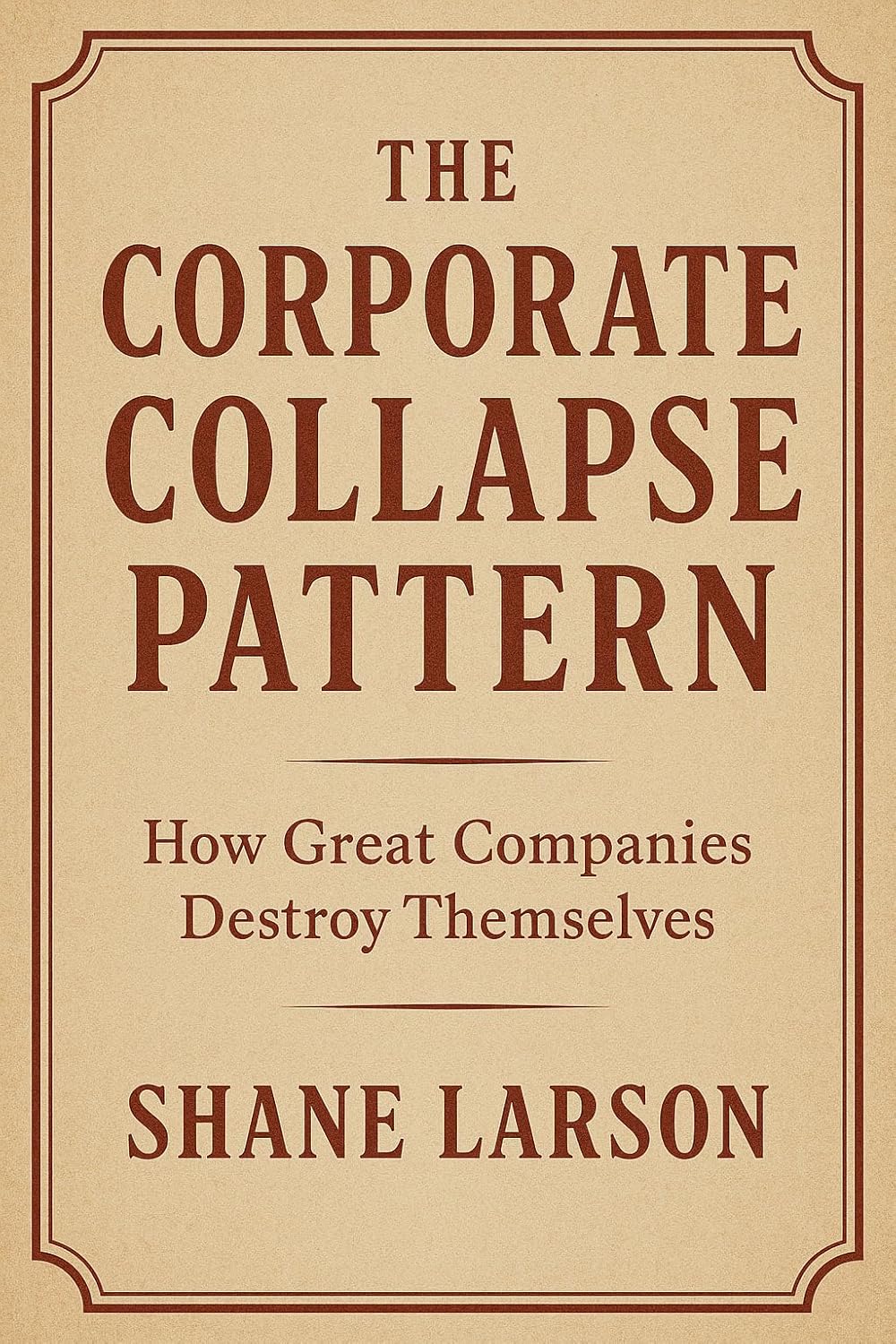
The Corporate Collapse Pattern
How Great Companies Destroy Themselves (Book 2)
by Shane Larson · The Collapse Pattern (Book 2)
Kodak, Blockbuster, and Nokia were industry giants—until their own decisions led to their downfall.
Kodak invented digital photography. Then digital photography killed Kodak.
Blockbuster turned down the chance to buy Netflix for $50 million. Enron was named America's Most Innovative Company six years running — while committing one of the largest frauds in corporate history. Nokia controlled 40% of the global mobile phone market and dismissed the iPhone as a toy. Theranos fooled a board of generals, senators, and billionaires for over a decade. WeWork's $47 billion valuation evaporated in weeks.
These aren't stories about bad companies. They're stories about great companies — dominant, admired, and apparently invincible — that destroyed themselves through a pattern so consistent it borders on mechanical.
The Corporate Collapse Pattern examines history's most dramatic business failures to map the recurring dynamics that appear when great companies come apart. Not management theory. Not business school retrospectives. A clear-eyed, evidence-driven look at the structural forces that turn market leadership into catastrophic failure — and a practical framework for recognizing them before the obituary is written.
What you'll discover:
- Why success is the most dangerous thing that can happen to a company — and how dominance plants the seeds of collapse
- How the same cycle of hubris, denial, and death spiral plays out across industries, eras, and business models
- The seven warning signs that appeared before every collapse — and the organizational dynamics that ensured they were ignored
- Why corporate boards almost never save failing companies, even when the evidence is right in front of them
- How Theranos maintained a $9 billion valuation and WeWork lost $47 billion in weeks — and what both reveal about the same underlying failure mode
- What the companies that survived their near-death experiences — Microsoft, Apple, IBM — did differently from the ones that didn't
Case studies include: Kodak, Blockbuster, Nokia, Enron, Theranos, WeWork, Sears, Silicon Valley Bank, and Lehman Brothers.
Includes a Corporate Collapse Warning Signs Checklist you can apply to any organization, a timeline of major corporate collapses, and a curated further reading list.
Book 2 in The Collapse Pattern Series, from the author of The Collapse Pattern: How Great Civilizations Destroy Themselves.
More in The Collapse Pattern

The Collapse Pattern
How Great Civilizations Destroy Themselves
Ignoring Rome's warning signs wasn't just reckless, it set the stage for irreversible collapse.
Economic Collapse Pattern
How Financial Systems Destroy Themselves
When investors ignored skeptics in 2008, it led to a global financial meltdown that changed economies forever.
The Empire Collapse Pattern
How the Mightiest Powers Fall
No empire, from Rome to the Soviets, fell due to enemies — they crumbled from within.
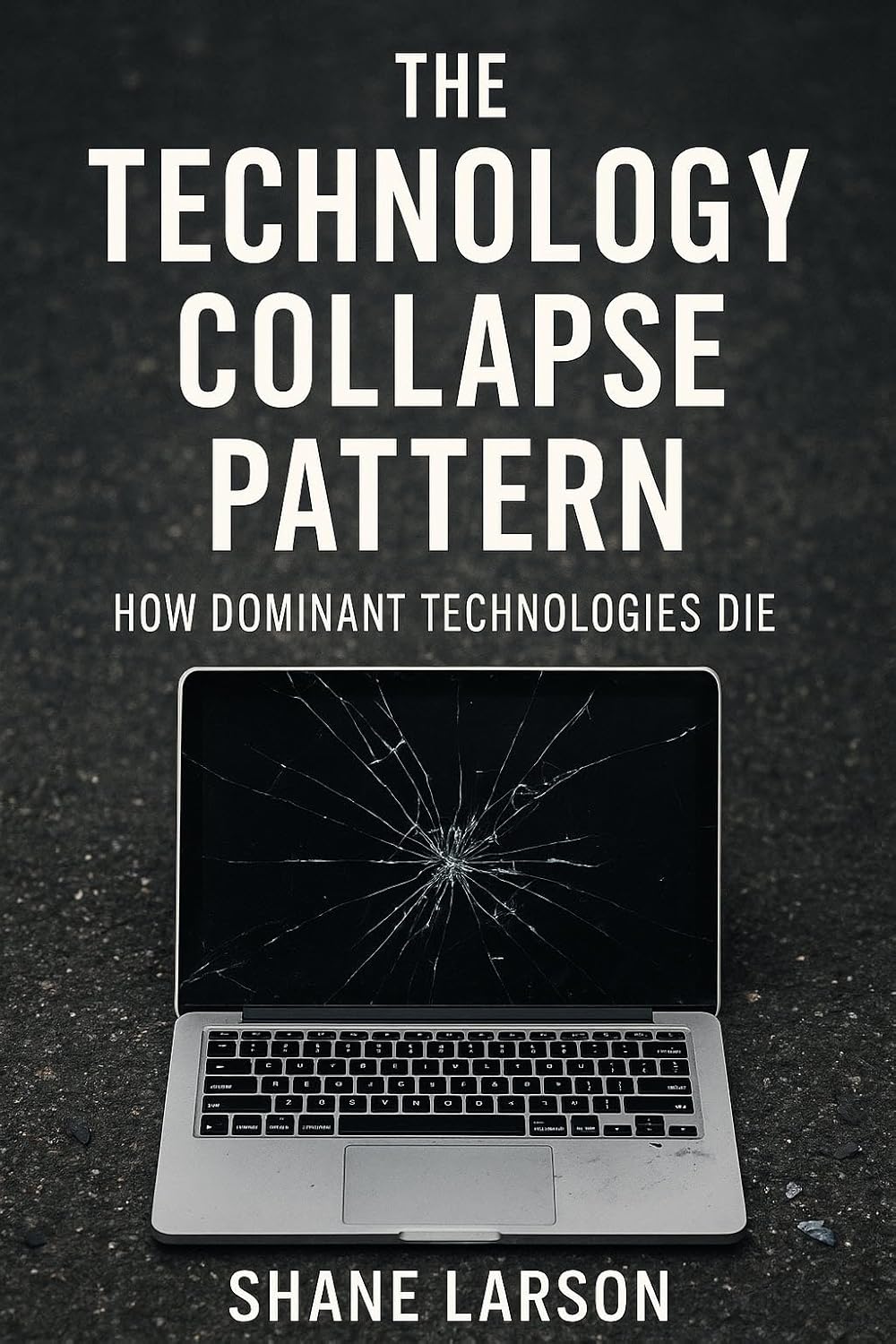
The Technology Collapse Pattern
How Dominant Technologies Die (Book 5)
Imagine being the Kodak engineer who watched management lock away the world's first digital camera.
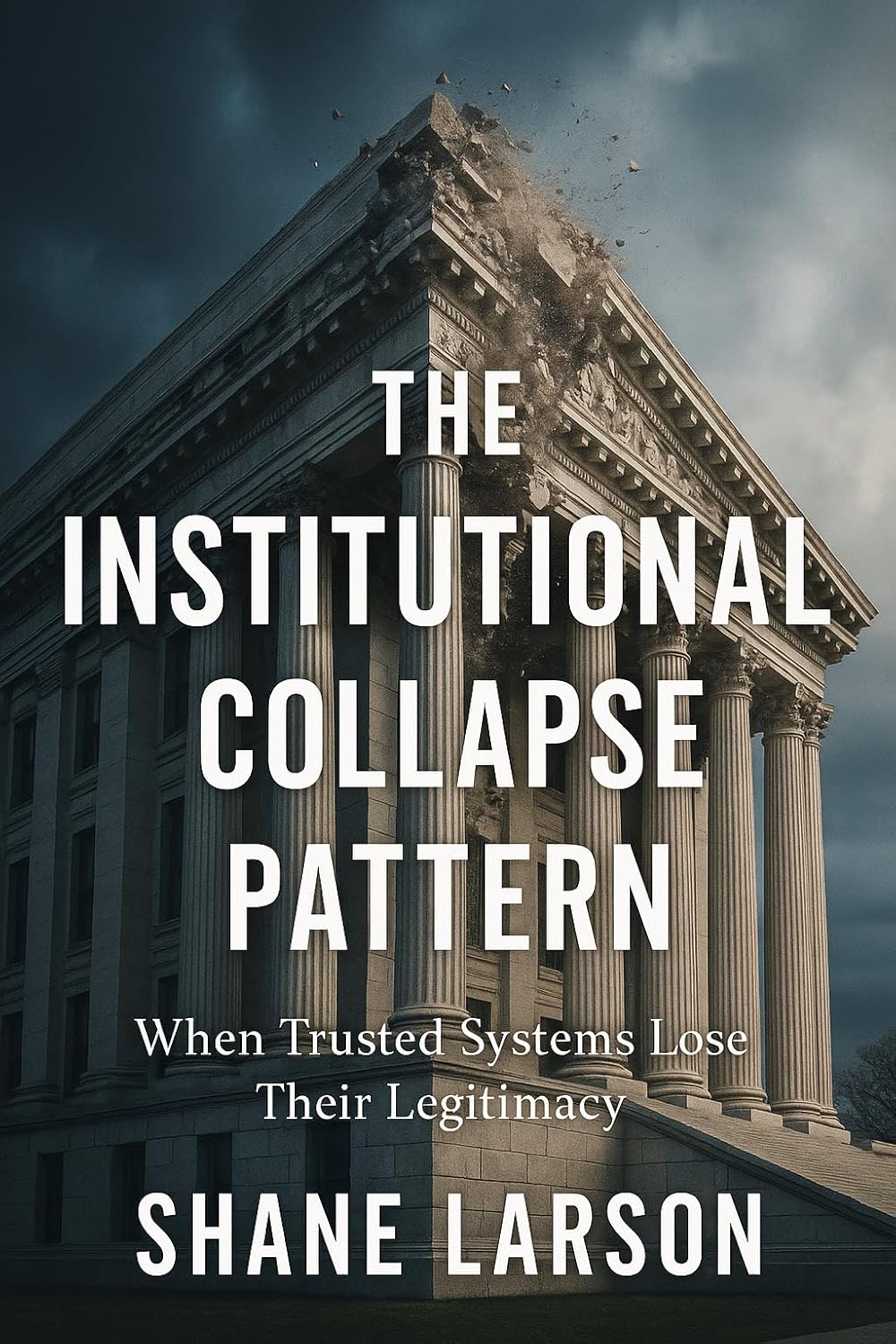
The Institutional Collapse Pattern
When Trusted Systems Lose Their Legitimacy
When seven pillars of society crumble together, the world as we know it is at stake.

Collapse Proof
What Makes Systems Survive When Everything Else Falls
Failing to understand why Nintendo outlasted Atari could mean repeating history's greatest business collapses.
Get new articles by email
Join the list for new tutorials on API development, AI applications, and software architecture — plus early word on new books. No spam, unsubscribe anytime.
We never share your address. One-click unsubscribe in every email.