Amazon KDP Content Quality Notice: What It Actually Means and What to Do (2026)
The "content quality" email is short and generic on purpose. Here's how to read it, which of the four enforcement modes you're actually in, what to do in the first 24 hours, and the response mistakes that turn a fixable flag into a terminated account.
Amazon KDP Content Quality Notice: What It Actually Means and What to Do (2026)
The email is three paragraphs long, cites "content that does not meet our guidelines," names a title, and tells you almost nothing else. If you're reading this with that email open in another tab: slow down. The next message you send matters more than the notice you received, and the most common expensive mistake in this situation is answering fast.
This guide comes out of a real publishing operation — 200+ titles, and a correspondence file that includes the full spectrum of KDP enforcement, from routine title blocks to two account terminations (both reversed). What follows is what that correspondence actually teaches, not what author forums guess.
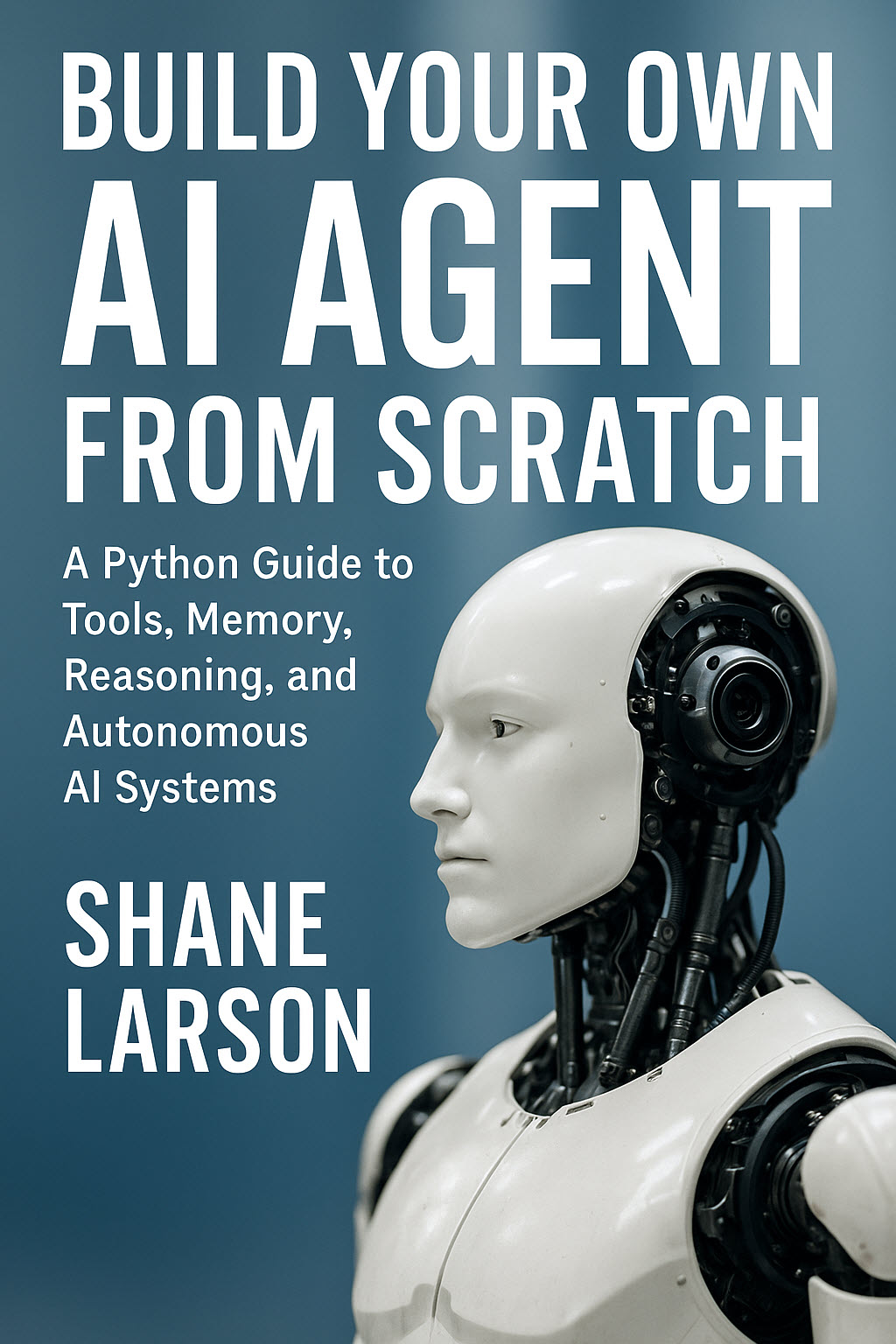
Build Your Own AI Agent From Scratch
Build a complete AI agent from scratch in Python — no frameworks, no hype. 16 chapters covering tools, memory, reasoning, MCP, multi-agent systems & more.
Learn More
The most expensive misunderstanding in indie publishing
Authors believe enforcement is a judgment about their book. It usually isn't. It is a judgment about a pattern, and the book is one input.
When a title gets blocked, the instinct is to defend the manuscript — it's original, it took months, readers love it. That defense frequently fails, not because it's untrue, but because it answers a question nobody asked. The pattern that triggered the review may have been your account's upload velocity that week. A subtitle that matched a trademarked phrase. A keyword field. Or a category-wide sweep that removed four of your neighbors in the same month.
Three consequences follow:
- The book is not the unit of risk. The account is. A title you'd happily lose can still be the one that costs you the catalog.
- Being right is not a defense. Being documented is. Amazon does not litigate. It reviews, and reviews are won on artifacts, not arguments.
- The cheapest fix is always before publish. Every remediation gets dramatically more expensive after the title is live, and more expensive again after a flag.
First: which emergency are you actually in?
Every KDP enforcement event is one of four things. They look similar in the inbox. They are not similar at all — and the response that resolves one will actively damage you in another.
| Mode | What happened | Reversibility | The wrong response that makes it worse |
|---|---|---|---|
| 1. Title block | Submission rejected before going live | High — usually one edit cycle | Resubmitting unchanged, repeatedly. Each resubmission is a data point. |
| 2. Title takedown | Live title removed after the fact | Moderate — depends on cause | Republishing the same content under a new ASIN. This is the fastest way to convert a takedown into a termination. |
| 3. Account review | Publishing frozen and/or payments held; catalog still live | Moderate to low — slow, opaque | Opening multiple support tickets in parallel. It reads as pressure and resets the queue. |
| 4. Account termination | Account closed; catalog delisted | Low | Immediately opening a new account — a policy violation in itself, and it typically ends any path back. |
The ambiguity rule: if you can't tell whether you're in Mode 2 or Mode 3, assume Mode 3. The careful response is never wrong; the casual one sometimes is.
A content quality notice about a single title is usually Mode 1 or Mode 2. Check now: can you still access your dashboard and publish other titles? If yes, breathe. Most Mode 1s are routine and should feel routine — an occasional rejection is a normal cost of publishing, and one competent, factual reply resolves most of them.
What the words in the notice actually signal
Enforcement notices are short and generic on purpose. The specific words present are the only signal about what tripped:
- "Content quality" / "disappointing content" — usually the gap between what the listing promises and what the buyer receives: thin content, padded page counts, formatting that breaks on device, or content Amazon's Guide to Kindle Content Quality describes as "excessively reused, recycled, or repeated within or across books."
- "Similar" / "duplicate" — a similarity signal against another book, someone else's or your own. Self-similarity across a series or template catalog is the version authors never see coming.
- "Rights" / "publishing rights" — someone (or something automated) questions whether you hold the rights to text, images, a translation, or a trademarked phrase in your metadata.
- "Customer experience" — complaints or returns. This evidence is written by your own buyers, which makes it the hardest category to argue with.
- "Account" — stop. You are not in a title problem anymore. Respond accordingly (see Mode 3 above).
Map the notice to one of these before writing a word. If your reply defends against the wrong category, you've documented confusion, not innocence.
The first 24 hours
In order:
0. If the notice names a title, unpublish that title now — before anything else. This is not a tactic; it's the agreement you signed. KDP's Terms and Conditions (§5.1.2) state that if you discover submitted content doesn't comply, you "must immediately withdraw the content by unpublishing it." You don't need permission and you shouldn't ask for it. In one documented case, waiting for permission preceded an account termination by twenty-nine hours. Unpublishing is reversible. A termination is much less so.
1. Read the notice three times and write down what it actually says — not what you fear it says.
2. Stop publishing. Everything queued, everything scheduled, every format. Publishing new titles into an open issue is read as continuing the conduct under question.
3. Screenshot everything. The notice, the listing state, the dashboard, the messages thread. States change; screenshots don't.
4. Draft your response. Do not send it. Sleep on it. There is no deadline that makes a twelve-hour delay worse than a bad first message.
The responses that make it worse
Every one of these is common, and every one is irreversible once sent:
- Parallel tickets across multiple channels. One channel, one thread, always. Fragmenting the thread resets your position rather than advancing it.
- Contradicting yourself across messages. Every message is on file and read together. "I wrote it myself," then "my editor handled that chapter," then "I used AI for research" — that's not clarification, it's three documented positions. Decide what is true, write it once, never adjust it under pressure.
- Claiming error on a repeat finding. On a first finding, "I believe this is a mistake" is sometimes true. On the second identical finding, it tells the reviewer you still don't know what you did — which is the one thing that makes reinstating you indefensible.
- Offering remediation instead of performing it. "I'll remove it if you want me to" asks the reviewer to design your remedy. They won't, and the terms already oblige you to act. Remediate first, then report it in past tense.
What an appeal actually is
Not a defense, an argument, or a plea. It is a short factual submission that makes it easy for a reviewer to justify reinstating you. That reviewer has a queue, limited time, and no memory of you. They are deciding one thing: whether reinstatement is defensible if someone else reads the file later.
The anatomy — five parts, under 300 words total:
- Identify precisely. ASIN, title, account email, notice date. First line lets them find the record.
- State the concern in their terms. "I understand the concern to be X." Proves you read it — and invites correction if you've misread, which is often the most useful reply you can get.
- The facts, with evidence offered. Two to four checkable sentences, no adjectives. "The manuscript was drafted between June 2 and July 19; I hold nine dated draft versions." Offer the evidence; don't attach it unasked.
- What you have already done. Remediation, past tense. This is what lets them close the file.
- One clear ask. Never two.
What never goes in: revenue (reads as leverage-seeking), effort (not evidence of compliance), personal circumstances (makes refusal easier, not harder), legal threats (routes you out of the queue that reinstates), and anything about other publishers doing worse.
The honest part
In the documented cases behind this article, reinstatements showed no observable relationship between appeal quality and outcome. The worst message in the file was followed by a restoration; so was the best. Appeals are worth writing carefully for one demonstrated reason: they stop you from making it worse — and forcing yourself to write "here is the mechanism, here is what I audited, here is what I fixed" is what actually ends the pattern.
Which means nearly all of your real leverage sits before publish. The notice you're holding was almost certainly preventable in the ninety seconds it takes to check the thing that tripped it — and the next one still is.
Check your next book before Amazon does
The KDP Risk Ledger is the complete pre-publish risk system behind this article: a 16-condition instant-stop gate, six weighted risk domains with scoring anchors, an account-exposure model, a decision matrix, the full appeal templates with line-by-line annotations, and a 5-tab spreadsheet scorecard — all built from real enforcement correspondence, including two terminations that were reversed. An 82-page field manual (PDF + EPUB) plus working spreadsheets. Get it on Gumroad →