How to Risk-Check a Book Before Publishing on KDP: The 45-Minute Pre-Publish Audit (2026)
Every KDP problem is cheapest to fix before you hit publish — and most account disasters were preventable in minutes. The pre-publish audit a 200+ title operation runs on every book: the instant-stop gate, the six risk domains, and why risk is two numbers, not one.
Every remediation in KDP publishing gets roughly 5–50× more expensive after the title is live, and 100× more expensive after a flag. A metadata fix before upload is a twenty-minute edit. The same fix after a block is an appeal cycle. After a pattern of blocks, it can be your account.
This is the pre-publish audit a real 200+ title publishing operation now runs on every book — built after an enforcement history that included account terminations (reversed), and built around the finding that mattered most: every documented enforcement event in that file was preventable, before publish, in minutes.
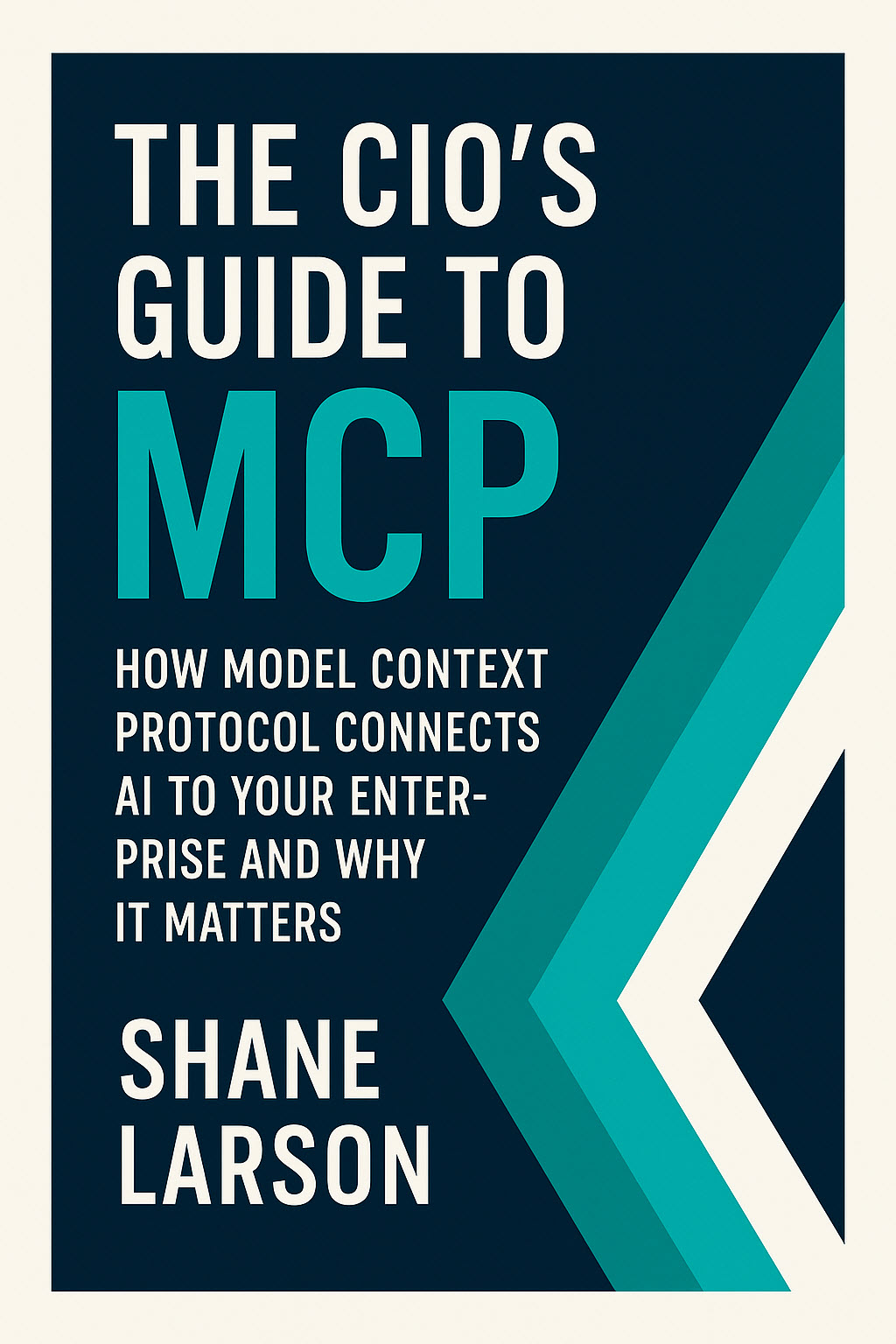
The CIOs Guide to MCP: How Model Context Protocol Connects AI to Your Enterprise and Why It Matters
Stop building custom AI integrations. MCP is the universal standard adopted by Anthropic, OpenAI, Google, Microsoft. CIO guide to enterprise adoption.
Learn MoreThe audit has a fixed shape: gate → score → decide → document. About 45 minutes per title. Here's the working version.
Part 1: The instant-stop gate (5 minutes)
Before any scoring, run a list of binary conditions. If any is true, the title does not publish — no matter how good everything else looks. The gate exists because weighted scores have a fatal property: a book that's excellent in six areas can mathematically absorb a catastrophic problem in the seventh. Some things are not tradeoffs.
The full gate has 16 conditions. These six catch the most real-world failures:
1. Your AI disclosure isn't accurate — and you may have the definition backwards
KDP's Content Guidelines draw the line at who produced the first draft, not how much you edited afterwards. AI-generated means content an AI tool created — "even if you applied substantial edits afterwards." That clause is in the guideline text. Heavy rewriting does not convert AI-generated into AI-assisted; Amazon closed that door explicitly. (You wrote the draft and a tool edited or brainstormed with you? That's AI-assisted, no disclosure required.) AI-generated cover art and machine translations are named explicitly as requiring disclosure.
Why this is a stop condition: misdisclosure is an integrity finding, not a content finding. Integrity findings escalate fastest and are the hardest to appeal — the appeal requires the reviewer to believe you, and you've already been recorded as inaccurate once. Disclosure itself is a metadata field buyers never see. The penalty is exclusively for getting it wrong.
2. Another author's name — anywhere in your keywords
KDP's Metadata Guidelines prohibit, as named categories: keywords containing "other authors" and "books by other authors," plus sales-rank claims ("bestselling"), promotions ("free"), and anything unrelated to your book's content. These are listed prohibitions, not judgment calls. In the enforcement file behind this article, a keyword field pairing a living author's name with their book title terminated an account. Read all seven keyword lines aloud: any human name that isn't yours, any book title that isn't yours, any brand — out.
3. A trademarked term in your title, subtitle, series field, or keywords
Franchise names, game names, brand names, and "unofficial guide" constructions that lead with the mark. Search each distinctive noun phrase in the free USPTO trademark database — ten minutes. Nominative fair use is a real legal doctrine and a terrible business plan: you're not defending it in court, you're trying not to trigger a rights-holder's automated brand-protection sweep.
4. You can't produce a license for every image, font, and cover asset
Fonts are the one everybody forgets — most "free" fonts aren't licensed for commercial embedding, and cover designers frequently don't check. List every asset: source, license type, date, receipt location. A blank row is a stop. The test that matters: if a rights holder emailed tomorrow, could you send the license file within an hour?
5. You have (or manage) more than one KDP account
Terms and Conditions §4.2, verbatim: "You may maintain only one account at a time." A second account — including the one made "just to test," or a family member's account you help with — is a direct violation and the most reliable path to termination, even for accounts doing nothing else wrong. Linkage is inferred from payments, tax identity, address, device, and network, not just logins.
6. Your cover would trip an image classifier
Covers are scored before anyone reads a word, with none of the context the manuscript would earn. Weapons, blood, flags of countries in active conflict, hate symbols (including on books critical of them), recognizable living public figures. The test: shrink the cover to search-result thumbnail size and look at it as blocks of color and shapes. If a two-second glance reads as violence or political charge, it will read that way to the classifier. In one documented case, a non-partisan, analytical book on an international dispute was rejected for its flag-and-crescent cover — the text was never the issue, and no appeal about the writing was ever going to fix a thumbnail.
Gate result: zero conditions true → proceed. Any condition true → fix it, log it with a date, re-run. And the discipline that makes it work: you don't get to skip the gate because you're confident. Confidence is the condition under which people publish the title that ends the account.
Part 2: Score the six risk domains (20 minutes)
After the gate, score the title 0–10 in six weighted domains:
- Content origin & authorship (×3) — who actually produced the words, and whether your account's representation of that matches reality. Includes the most underrated risk in AI-assisted nonfiction: fabricated citations. They rarely trigger Amazon directly; they reliably trigger readers, whose complaints trigger Amazon — and "the sources in this book don't exist" is nearly impossible to defend.
- Originality & similarity (×3) — distance from existing books, including your own. Series sharing over ~15% of body text, template catalogs, and thin public-domain derivatives all score high here.
- Rights & IP (×3) — quotations, translations (modern translations of ancient texts are copyrighted), lyrics (no safe word count), fonts, and trade dress.
- Metadata & discoverability (×2) — the most commonly flagged domain and the cheapest to fix. Does the subtitle sound like a book, or like a search query?
- Customer expectation (×2) — the gap between the listing's promise and what the buyer receives. This domain's evidence is written by your own buyers, which makes it the least appealable.
- Category heat (×2) — how aggressively your niche is being policed right now. Foraging guides, supplement dosing, and children's content run extreme; AI/prompt guides and get-rich niches run high; genre fiction runs cold. Heat moves — re-check quarterly.
Weighted total → an index from 0–100. Under 20 is clean; 35–49 means something real is wrong (usually named in one ×3 domain); 50+ carries risk on its own merits.
Part 3: The insight most scoring systems miss — risk is two numbers
Here's where most risk advice goes wrong: it produces one number per book. But a title score and an account score are different measurements, owned by different processes, on different timescales — and they must be read together, not multiplied.
Account exposure combines how much scrutiny your account attracts (velocity changes, enforcement history, identity consistency, pen-name coherence) with your blast radius — how much you lose if it goes wrong: how many titles share the account, what share of your income flows through it, how exclusive your distribution is, and how long a rebuild from zero would take.
The decision comes from a matrix of the two. And the matrix produces the conclusion that surprises publishers most: a book that is perfectly publishable on a clean account can be a hard Hold on a concentrated one. In the worked example from the system behind this article, an ordinary, violation-free history title scored as a Hold — not because of anything in the manuscript, but because it would land on a 200-title, fully-exclusive account carrying half a household's income. There was nothing wrong with the book. There was plenty wrong with the concentration.
Most publishers who run both numbers discover the same sentence: the books are mostly fine, and the account posture is the real project. That sentence is invisible in any model that returns a single score.
Part 4: Document it (10 minutes)
Record the gate result and domain scores, dated, for every title — plus the evidence a reviewer would want: dated drafts, contributor agreements, asset licenses, competitor scans, keyword rationale. Amazon doesn't litigate; it reviews, and reviews are won on artifacts, not arguments. A dated gate log across your catalog is the single most persuasive good-faith compliance artifact you can own, and it costs ten minutes per title to maintain.
One rule makes the whole system honest: you may not move a decision by adjusting the scores — only by changing the facts the scores describe. Write the scores down, date them, and let the record embarrass you if you cheat.
Start with your next upload
You don't need the full system to start. Before your next publish: read your keywords aloud, verify your AI disclosure against the first-draft test, search your three most distinctive sentences, shrink your cover to thumbnail size, and write one paragraph on how your book differs from its five closest competitors. That's twenty minutes, and it prevents the majority of the enforcement events in the file this article is drawn from.
Get the complete system
The KDP Risk Ledger is the full working version: all 16 instant-stop conditions with verification steps and fixes, complete scoring anchors for all six domains, the account-exposure and blast-radius model, the publish/hold decision matrix, annotated appeal templates, a defense-dossier system, and a 5-tab spreadsheet scorecard that runs the whole audit. An 82-page field manual (PDF + EPUB) plus working spreadsheets and CSV imports — built from real enforcement correspondence, including two terminations that were reversed. Get it on Gumroad →